
A Factory Owner’s Ledger: Where Is Your Money Being Burned?
People in the heat treatment industry have an almost instinctive sensitivity to costs. They glance at the electricity bill, glance at the gas bill, and sigh at the maintenance bill. But many don’t realize that their money may have been paying for “lumps of metal” all along.
Those baskets, trays, racks, and fixtures in your furnace—they go into the furnace with your workpieces, heat up together, and cool down together. You think they’re “helping,” but in reality, they’re “eating money.”
Industry data is clear: for various types of heating furnaces, the heat carried away by fixtures, trays, baskets, racks, and other tooling that are heated together with workpieces accounts for 18%–29% of total heat. Pit furnaces have the highest energy consumption from their hanging fixtures, followed by box-type furnaces and conveyor furnaces. One startling figure is that in certain furnace types, the heat consumed by fixtures and tooling can equal or even exceed that of the workpieces being processed.

In other words, for every 100 yuan you spend on electricity, nearly 30 yuan is burned on the “basket holding the stuff.”
Hitachi Construction Machinery of Japan conducted a classic case study: by improving the tray structure of a sealed box-type furnace and reducing its weight, the load per tray increased from 200 shaft-type parts to 300. Previously, 3 furnaces operated 20 days a month; after the change, 2 furnaces operated 24 days a month, directly saving 20% electricity, reducing monthly electricity consumption by 14,800 kWh, and saving approximately 500 kg of propane gas.
This is no small change. But most factory owners haven’t thought in this direction.
Heat treatment tooling materials have traditionally been Fe-Ni-Cr heat-resistant materials like 330 alloy and 600 alloy. They’re adequate, but not “light” enough, nor “durable” enough. Every rod and beam you use must have a sufficiently thick cross-section to withstand creep deformation at high temperatures. What’s the price of thickness? It’s the heat that gets wasted every furnace cycle.
The logic behind tooling weight reduction is simple: lighter means faster heating and cooling; faster means shorter cycle time per furnace; shorter means lower energy consumption per unit of output. In this logical chain, material is the starting point.
“Slimming Down 43%”—A Real Case Study
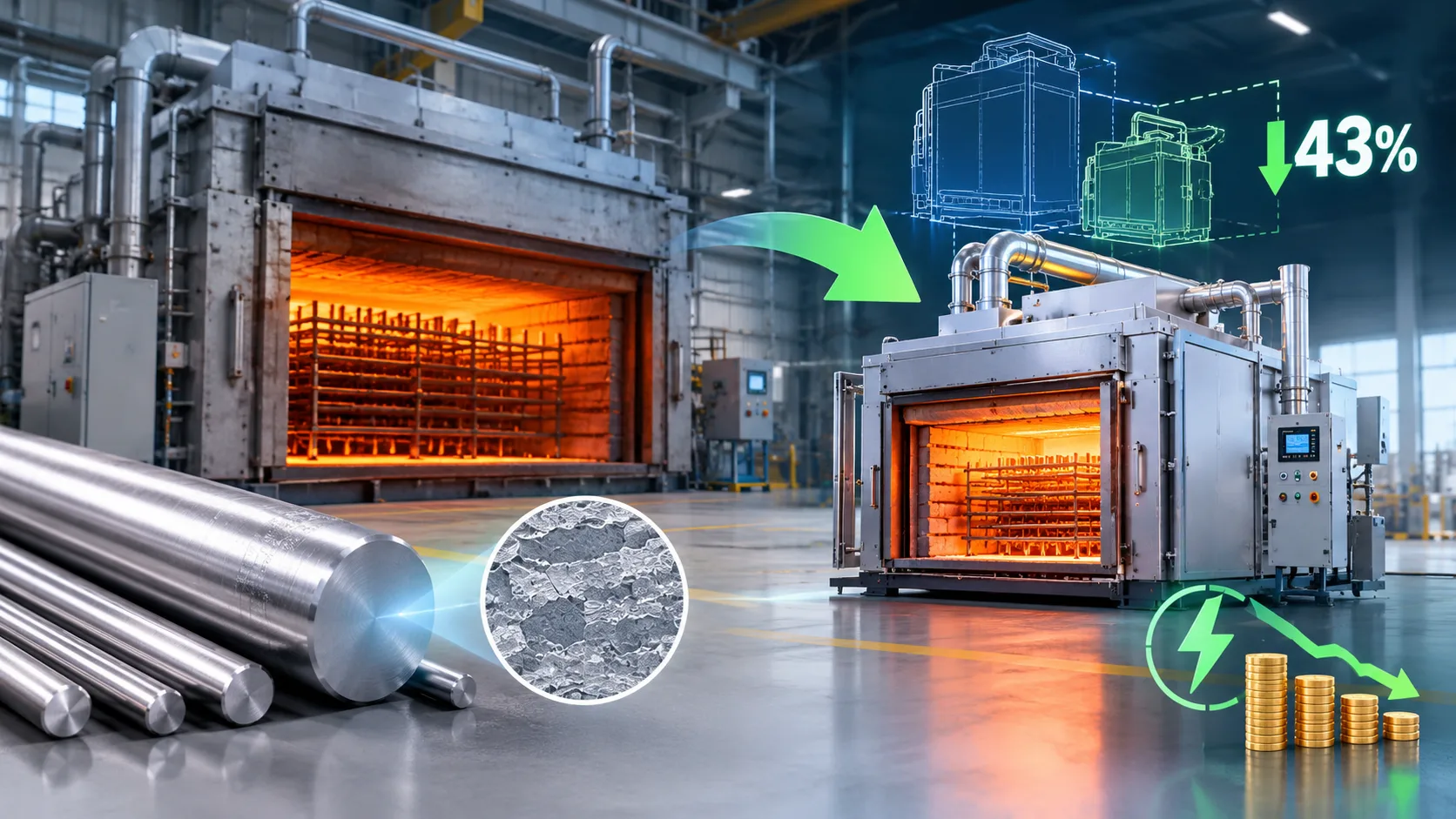
HaynesInternational’s official technical documentation records a real replacement case: a rod-frame basket for a heat treatment furnace, originally made of 330 alloy and 600 alloy with 1/2-inch rod diameter. After switching to HR-120 alloy, the rod diameter was reduced to 3/8 inch, and the weight dropped by 43%.
What does 43% mean? A basket originally weighing 50 kg becomes 28.5 kg. Each furnace cycle heats 21.5 kg less metal. Running three shifts a day, that’s over 20,000 kg of metal per year that doesn’t need to be repeatedly heated above 900°C.
Why can HR-120 reduce the rod diameter from 1/2 inch to 3/8 inch without problems? The core lies in high-temperature strength.
According to comparison data published by HaynesInternational, at 1600°F (approximately 870°C), HR-120 has an ultimate tensile strength of 35.8 ksi, while RA330 alloy has only 18.7 ksi and 600 alloy only 20.0 ksi. At 1800°F (approximately 982°C), HR-120 still has 18.6 ksi, while 330 alloy has only 10.7 ksi. This means that under the same high-temperature operating conditions, HR-120 can withstand nearly twice the load of 330 alloy.
Higher strength means thinner cross-sections can be used; thinner cross-sections mean lighter weight; lighter weight means less heating energy consumed per furnace cycle. This is a positive cycle.

And the benefits of weight reduction go beyond saving electricity. Haynes’ official vacuum furnace basket technical brief points out that using lightweight high-temperature alloy baskets can achieve triple benefits: shortening heating and cooling cycles, reducing part scrapping due to insufficient quenching rates, and increasing furnace load capacity without increasing cycle time. Together, these three essentially mean the same furnace, the same time, and you can do more work.
Deconstructing HR-120: What Makes It So “Capable”?
Composition Design: Not “Piling On” Materials, but “Cleverly Blending”
HR-120 is a solid-solution-strengthened Fe-Ni-Cr heat-resistant alloy, UNS number N08120. Its core composition is: Fe approximately 33%, Ni approximately 37%, Cr approximately 25%, with Nb (niobium) and N (nitrogen) added for strengthening.
This ratio is interesting. It doesn’t simply “add more nickel” to improve performance; instead, it takes a “high-iron, low-nickel” route. Iron accounts for one-third, significantly reducing raw material costs—nickel content is only about half that of Haynes 230.
While saving money, performance doesn’t suffer. The addition of nitrogen is a key move. Nitrogen strengthens the matrix through interstitial solid solution strengthening, significantly improving yield strength. Niobium forms stable carbides that pin grain boundaries and inhibit high-temperature creep rupture. Trace boron (0.004%) segregates to grain boundaries, further improving creep ductility. This design approach allows HR-120 to maintain the corrosion resistance of nickel-based alloys while significantly reducing cost.
High-Temperature Strength: An “Honor Student” Below 2000°F
One of HR-120’s core selling points is that its high-temperature strength below 2000°F (approximately 1095°C) is significantly higher than similar Fe-Ni-Cr materials. Official documentation explicitly states: its oxidation resistance is comparable to 330 alloy and 800H alloy, but at temperatures up to 2000°F, its strength is significantly higher, even compared to Ni-Cr alloys.
“Comparable oxidation resistance, significantly higher strength”—the weight of this statement lies in the fact that it doesn’t sacrifice corrosion resistance for strength, but rather elevates strength at the same corrosion resistance level.
Specifically for creep rupture strength, HR-120’s data at 1000°C and 1000 hours is approximately 45 MPa, which is 3 times that of 310S stainless steel (approximately 15 MPa), close to 82% of Haynes 230 (approximately 55 MPa), but at only 60% of the latter’s cost.
“Anti-Corrosion Trio”: Oxidation, Carburization, Sulfidation
Corrosion in high-temperature environments is far more complex than at room temperature. In scenarios like heat treatment furnaces, petrochemical cracking furnaces, and waste incineration furnaces, materials often face not a single corrosion mechanism but a “combination punch.”
HR-120’s “three defenses” capability is what sets it apart from most heat-resistant alloys:
Oxidation resistance. The 25% high chromium content forms a dense Cr₂O₃ oxide film at high temperatures. After 1000 hours of exposure in air at 1095°C, the oxidation weight gain is only 1/5 that of 310S stainless steel, and the oxide scale spalling is less than 1/10 of the latter. If the oxide scale doesn’t spall, it means the alloy matrix won’t be continuously consumed by repeated spalling.
Carburization resistance. After 100 hours of exposure at 1000°C in an endothermic atmosphere, HR-120’s carburized layer depth is only 1.2 mm, far superior to Haynes 556 (approximately 2.5 mm), not to mention 310S (over 5 mm). The danger of carburization is that after carbon atoms diffuse into the matrix, they form a hard and brittle carbide layer, making the material brittle and prone to cracking. The combination of molybdenum and silicon in HR-120 effectively hinders carbon atom diffusion.
Sulfidation resistance. This is HR-120’s “killer move” in the petrochemical industry. In cracking gas containing 0.05% hydrogen sulfide at 800°C, HR-120’s corrosion rate is only 0.02 mm/year, which is 1/5 that of traditional HK40 alloy. Sulfidation corrosion has long been a “chronic problem” in petrochemical medium-temperature equipment—equipment has to be replaced before reaching its design life, and a single shutdown can cause losses of millions.
Oxidation, carburization, and sulfidation are three different corrosion mechanisms. An alloy that can simultaneously withstand all three is indeed rare among heat-resistant alloys. Many alloys specialize in one area—some have good oxidation resistance but poor sulfidation resistance, others have strong carburization resistance but average oxidation resistance. HR-120’s “three defenses” capability relies on the synergistic effect of three elements: chromium (oxidation resistance + sulfidation resistance), silicon (carburization resistance), and molybdenum (carburization resistance).
Welding and Processing
For factories, whether a material is easy to process and weld is as important as performance.
HR-120 can be welded using tungsten inert gas welding (GTAW), gas metal arc welding (GMAW), shielded metal arc welding (SMAW), and resistance welding, among other methods. Haynes 556 filler wire and MULTIMET electrodes are recommended. Preheating is not required before welding; interpass temperature should be controlled below 200°F (approximately 93°C), and post-weld heat treatment is generally not needed. These process characteristics are very friendly for on-site construction.
The alloy itself can be hot worked or cold worked. It is typically supplied in the solution-annealed condition, with solution treatment performed in the range of 2150–2250°F (approximately 1177–1232°C) followed by rapid cooling.
The Unsung Hero of Oil Refineries
Heat treatment baskets are just HR-120’s “entry-level” application. In the petrochemical industry, its presence is even stronger—it’s just that outsiders don’t often see it.
Radiant tubes are core components in petrochemical heating furnaces, working long-term in high-temperature flue gas while enduring both oxidation and carburization. HR-120’s oxidation resistance and high-temperature strength make it a preferred material for radiant tubes. A 6-meter-long radiant tube using HR-120 instead of Inconel 617-grade alloy can save $15,000 to $40,000 per tube.

Reformer tubes are key components in hydrogen production units, operating at high temperatures and in complex atmospheres. In steam methane reforming (SMR) environments, HR-120 is listed as a candidate structural material, and its oxide layer in CH₄-CO-H₂-H₂O mixed gas shows excellent stability.

Heat exchangers also benefit. Heat exchanger tube bundles work in high-temperature media containing sulfur and chlorine, placing extremely high demands on material corrosion resistance. HR-120’s corrosion rate in sulfur-containing high-temperature fuel gas is below 0.8 mm/year, far lower than iron-based heat-resistant steels (such as HK40’s over 5 mm/year).

A real retrofit case of an ethylene cracking furnace tube illustrates the point well. A petrochemical enterprise’s 100,000-ton/year ethylene plant originally used HK40 alloy for its cracking furnace tubes, which had to be shut down for replacement after only 3 years of operation due to corrosion thinning and carburization embrittlement, with a single-batch loss of 3.8 million yuan. After switching to HR-120 centrifugally cast furnace tubes in 2024, they operated continuously for 2 years at 850°C in cracking gas containing 0.06% hydrogen sulfide. The inner wall corrosion thinning was only 0.04 mm, the carburized layer thickness did not exceed 0.1 mm, hardness remained stable at 230 HBW, and there were no cracks. The ethylene yield of the cracking furnace also increased from 32% to 33.5%. Based on this, the furnace tube life is estimated to reach over 12 years, 3 times longer than HK40.
These pieces of equipment are inconspicuous, but once they fail, the entire line must stop. HR-120’s role in the petrochemical industry is like rebar in a building—you can’t see it, but it determines how long the building can stand.
Why It’s Called One of the “Lowest Total Cost of Ownership” High-Temperature Alloys
Back to the question factory owners care about most: Is this material actually cost-effective?
First, the unit price. HR-120 is not the cheapest. Its raw material cost is about 60% of Haynes 230, but stainless steel is certainly cheaper than it.
But if you calculate the full picture, the conclusion changes:
First account: Weight reduction saves electricity. 43% tooling weight reduction means nearly half the tooling weight is not heated each furnace cycle. Based on tooling energy consumption accounting for 18%–29% of total heat, a 43% weight reduction could theoretically save 8%–12% of total heat. There are actual records of 20% electricity savings after using advanced alloys to reduce tray and fixture weight.
Second account: Long life saves maintenance. 330 alloy baskets are prone to deformation, sagging, and cracking after repeated high-temperature use, typically requiring repair or replacement within months to a year. HR-120’s creep resistance is more than twice that of 330 alloy, and its carburization resistance far exceeds the former. Longer basket life means lower replacement frequency, reduced downtime, and lower maintenance labor costs.
Third account: More load, more output. Lighter tooling means more workpieces can fit in the same furnace chamber space. The Hitachi Construction Machinery case proved that after tray weight reduction, each tray went from 200 parts to 300 parts, and what originally required 3 furnaces could be done with 2. The electricity and gas savings from operating one fewer furnace are real.
Fourth account: Fewer rejects. Lightweight baskets cool faster and quench rates are more uniform, reducing part scrapping due to poor quenching.
Only when you add these four accounts together do you get HR-120’s true “price.”
In one sentence: It’s not the “most expensive,” but it’s one of the “lowest total cost of ownership” high-temperature alloys—weight reduction saves electricity, long life saves maintenance, more load increases production, fewer rejects saves money.
To Switch or Not to Switch?
If you’re hesitating about whether to replace your existing 330 or 600 alloy tooling with HR-120, consider a few questions:
- – Is your furnace operated in batch mode? Batch furnaces undergo heating and cooling cycles every run, and the impact of tooling weight on energy consumption is far greater than in continuous furnaces.
- – Does your tooling frequently deform, crack, and need frequent replacement? If you’re already spending a significant amount on tooling repair and replacement each year, it indicates that the existing material’s high-temperature strength is insufficient.
- – Is there carburization or sulfidation in your process atmosphere? If so, HR-120’s “three defenses” capability can significantly extend tooling life.
- – Is your furnace often “underfed”? The load capacity freed up by tooling weight reduction can be directly converted into increased furnace load.
In the heat treatment industry, what often matters is not whose furnace is bigger or whose equipment is newer, but who uses every kilowatt-hour and every cubic meter of gas more wisely. Lightweighting of fixtures and tooling is a cost-reduction direction that many overlook but with clear returns. HR-120 alloy happens to be one of the best overall cost-performance choices currently available in this direction.