
What is the most corrosion-resistant material?
If you were curious about this as a child, the first answer you probably heard was “aqua regia”—the “king of acids” that can even dissolve gold.
Aqua regia is indeed formidable. A 3:1 mixture of concentrated hydrochloric acid and concentrated nitric acid produces strong oxidizing power and complexing ability, capable of turning chemically stable gold into chloroauric acid solution. For centuries, it has been the “ultimate weapon” in chemistry labs.
But have you ever wondered—if you placed a piece of metal in aqua regia, would it also be consumed?
The answer is yes, but there is one material that leaves aqua regia with “nothing to bite on.”
That material is Hastelloy C2000.
The pinnacle of corrosion resistance
Hastelloy C2000 (UNS N06200) is an all-round performer in the family of nickel-based corrosion-resistant alloys. In extremely aggressive media such as aqua regia, sulfuric/nitric acid mixtures, hydrochloric/hydrofluoric acid mixtures, and others, its performance typically surpasses that of its predecessors like C-276 and C-22.
Put bluntly: aqua regia can dissolve gold, but it has no effect on this material.
That is no exaggeration. C2000 was designed to withstand both oxidizing and reducing corrosive environments—two completely opposite conditions. Think of it as a “survival expert” that can endure scorching sun and freezing cold alike.
Because of this “all-eating” capability, it has earned the well-known title in the industry: “universal corrosion-resistant alloy.” Whether it’s sulfuric acid, hydrochloric acid, hydrofluoric acid, or various mixed acids, it can handle them.
What is its background?
To understand why C2000 is so tough, we need to start with its origins.
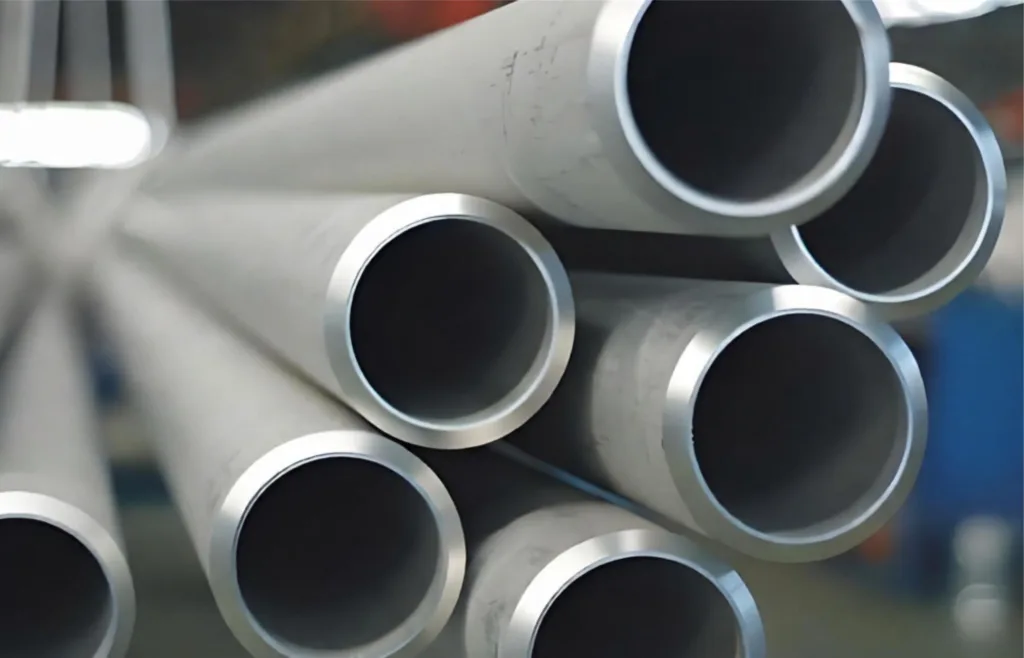
Hastelloy C2000 is a nickel-chromium-molybdenum (Ni-Cr-Mo) alloy developed by Haynes International in the late 1990s. It is regarded as an “upgrade” to C-22 and C-276.
Here’s a brief recap of the evolution of the Hastelloy C-series alloys:
- – First-generation C alloy (1926): Established the Ni-Cr-Mo framework but suffered from embrittlement after welding.
- – C-276 (1970s): Solved welding embrittlement through an ultra-low carbon design and became the most widely used Ni-Cr-Mo alloy globally, earning the title “universal corrosion-resistant alloy.”
- – C-22 (1980s): Increased chromium content for better performance in oxidizing environments and against localized corrosion.
- – C-2000 (late 1990s): Introduced copper for the first time, achieving a breakthrough in “all-round” corrosion resistance.
C2000’s most notable breakthrough is that it is the first Hastelloy series alloy to incorporate copper. This seemingly small change completely broke the traditional trade-off in C-series alloys between oxidizing and reducing resistance.
The secret of composition: how 1.6% copper changes everything
C2000’s chemical composition is precisely engineered:
| Element | Content (wt%) | Role |
| Nickel (Ni) | Balance (~59%) | Matrix element; provides austenitic structure and resistance to stress corrosion cracking |
| Chromium (Cr) | 22–24% | Resists oxidizing media; forms a dense Cr₂O₃ passive film |
| Molybdenum (Mo) | 15–17% | Resists reducing media; improves pitting and crevice corrosion resistance |
| Copper (Cu) | 1.3–1.9% | Signature element of C2000; significantly enhances resistance in reducing acids like sulfuric and hydrofluoric acid |
| Iron (Fe) | ≤3% | Improves hot workability |
| Carbon (C) | ≤0.01% | Ultra-low carbon design; eliminates risk of intergranular corrosion |
The brilliance of this composition lies in synergistic effects:
– Molybdenum (16%) + Copper (1.6%) work together to give outstanding resistance to reducing media.
– High chromium content (23%) ensures resistance to oxidizing media.
In simple terms: chromium handles “oxidation,” while molybdenum + copper handle “reduction.” The three elements divide the work and cooperate.
Before C2000, engineers faced a dilemma: to improve oxidizing resistance, you add chromium; to improve reducing resistance, you add molybdenum and tungsten. But metallurgical stability prevented pushing both to extremes. C2000 elegantly solved this decades-old problem with just 1.6% copper.
Mechanical properties: not just corrosion-resistant, but strong too
Corrosion resistance alone isn’t enough—chemical reactors, piping, and other equipment must withstand pressure, temperature, and mechanical loads. C2000 performs impressively in mechanical properties:
- – Yield strength: ≥345 MPa (room temperature)
- – Tensile strength: ≥750 MPa (room temperature)
- – Elongation: ≥40%
- – Density: 8.50 g/cm³
- – Elastic modulus: 207 GPa (20°C)
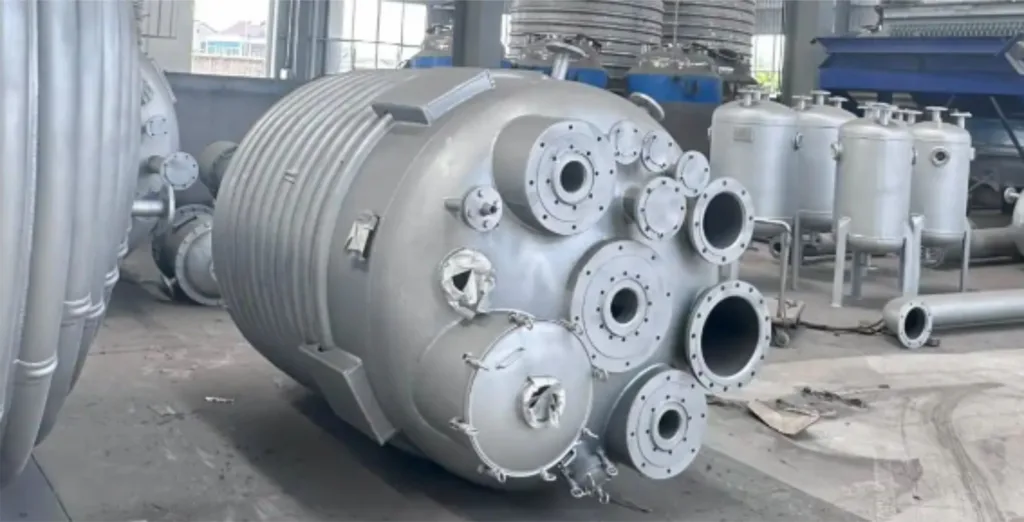
These figures mean C2000 fully meets the structural design requirements for most pressure vessels and piping systems. It offers both strength and toughness—with elongation over 40%, it can undergo significant plastic deformation before fracture, avoiding sudden brittle failure.
Real-world cases: data speaks
Theory is one thing; let’s see how it performs in actual service conditions.
Case 1: Chlorine-containing bleaching tower in a U.S. paper mill
In a chlorine-containing bleaching tower at a U.S. paper mill, piping made of Hastelloy C2000 was continuously exposed to wet chlorine gas at 60°C for 12 years. After 12 years, inspection showed the pipe wall had thinned by only 0.03 mm.
What does 0.03 mm mean? Roughly the thickness of a sheet of A4 paper.
Wet chlorine gas is notoriously a “material killer”—moist chlorine generates hydrochloric acid and hypochlorous acid, causing devastating corrosion to most metals. Ordinary carbon steel would perforate within days under such conditions, and stainless steel wouldn’t last much longer. Yet C2000 lasted 12 years with almost negligible wall loss.
This is thanks to C2000’s high chromium content (23%), which forms a dense chromium oxide passive film that effectively resists wet chlorine attack. Meanwhile, molybdenum further enhances pitting and crevice corrosion resistance.
Case 2: Reactor lining at BASF
BASF, the German chemical giant, is known for extremely stringent material requirements. In one of BASF’s reactors, C2000 was used as a lining material, serving in a hydrochloric acid-containing mixed acid environment at 180°C.
The result? Only 0.2 mm of thinning after 10 years.
0.2 mm—roughly two or three sheets of A4 paper. After being immersed in hot hydrochloric acid mixed acid at 180°C for a decade, the loss was that minimal.
Even more importantly, the equipment maintenance interval was extended from 2 years to 5 years.
For chemical plants, maintenance means production shutdown, and shutdown means millions or even tens of millions in losses per day. Extending the maintenance interval by more than double brings enormous economic benefits. This explains why top-tier chemical companies like BASF choose C2000—though the material seems expensive upfront, the total cost is actually lower in the long run.
What can it withstand?
C2000 is called a “universal corrosion-resistant alloy” for good reason. Its corrosion-resistance “arsenal” includes:
- – Sulfuric acid: In hot dilute sulfuric acid (0–60% concentration), C2000’s corrosion resistance is an order of magnitude better than C-276. In concentrations up to 80%, the corrosion rate remains consistently low at 0.1–0.5 mm/year.
- – Hydrochloric acid: C2000 offers the highest corrosion resistance among all Ni-Cr-Mo alloys in boiling dilute hydrochloric acid. While C-276 shows corrosion rates exceeding 0.5 mm/year in 1–1.5% HCl, C2000 maintains good resistance even at 3% concentration.
- – Hydrofluoric acid: The addition of copper greatly improves resistance in hydrofluoric acid.
- – Nitric acid: High chromium content provides excellent performance in oxidizing media like nitric acid.
- – Mixed acids: Particularly outstanding in mixtures such as sulfuric + hydrochloric acid, nitric + hydrochloric acid, etc.
- – Chloride-containing environments: Strong resistance to pitting, crevice corrosion, and chloride stress corrosion cracking.
Notably, C2000 has a pitting resistance equivalent number (PREN = %Cr + 3.3×%Mo + 16×%N) of 68–72, among the highest of all commercial nickel-based alloys. It performs excellently in the 6% FeCl₃ crevice corrosion test. For comparison, super duplex stainless steels have PREN values around 40.
How does it compare with its predecessors?
To understand how strong C2000 is, the best way is to compare it with its “elders”:
| Performance Dimension | C-276 (1970s) | C-22 (1980s) | C-2000 (1990s) |
| Contains copper | No | Trace | 1.6% (signature) |
| Oxidizing resistance | Fair | Excellent | Excellent |
| Reducing resistance | Excellent | Good | Excellent |
| Sulfuric acid resistance | Fair | Good | Superior |
| Pitting/crevice resistance | Baseline | Better than C-276 | Better than C-276 |
To summarize simply: C2000 ≈ C-22’s oxidizing resistance + C-276’s reducing resistance + copper’s extra boost against sulfuric acid.
In plainer terms: what C-276 can handle, C2000 can handle; what C-276 cannot handle (e.g., oxidizing acids), C2000 can handle too.
Processing and welding: good materials must also be usable
No matter how good a material is, if it’s difficult to process or weld, it won’t gain industrial acceptance. C2000 performs well in this regard as well:
- – Hot working: Recommended temperature range 950–1180°C.
- – Cold working: Work-hardening rate is faster than austenitic stainless steels; intermediate annealing may be used when needed.
- – Welding: Good weldability; common methods like TIG and MIG can be used. Thanks to its low carbon and low silicon design, no continuous grain-boundary precipitates form in the heat-affected zone. Post-weld heat treatment is typically not required—a huge advantage for manufacturing large chemical equipment.
- – Recommended filler metal: ERNiCrMo-17.
Where is it used?
C2000 finds wide application, covering almost all industrial scenarios that demand resistance to extreme corrosive environments:
- – Chemical process industry: Reactors, heat exchangers, piping, valves, pumps—handling sulfuric acid, hydrochloric acid, nitric acid, and their mixtures.
- – Acetic acid/anhydride production: Acetic acid is a key chemical raw material, and the process media are highly corrosive.
- – Flue gas desulfurization (FGD) systems: Absorbers, reheaters—resisting corrosion from SO₂, Cl⁻, etc., in flue gas.
- – Pharmaceutical industry: Process equipment involving strong acids, strong oxidizers, and chloride salts.
- – Nuclear fuel reprocessing: Extreme corrosive environments in the nuclear industry.
- – Phosphoric acid production.
- – Geothermal wells.
- – Pulp and paper industry: Bleaching vessels.
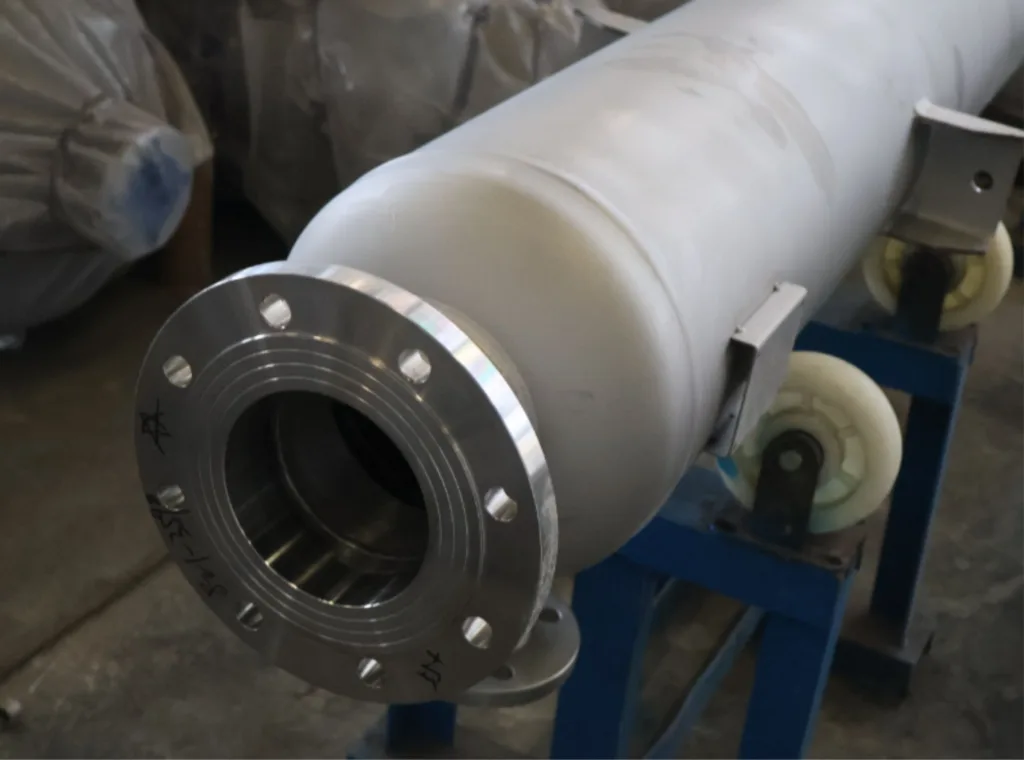
From aqua regia to wet chlorine gas, from boiling sulfuric acid to high-temperature hydrochloric acid mixed acids—Hastelloy C2000 has proven its reputation as the “indestructible little champion” of the chemical industry through real engineering cases.
It is not the cheapest alloy, but it may be the most worry-free. In those extreme corrosive environments where ordinary stainless steel perforates within days and titanium also fails in a few years, C2000 serves for ten or twelve years, with wall loss measured in “A4 paper thickness.” Maintenance intervals extending from 2 to 5 years, equipment life multiplied—these translate into tangible economic benefits.
Back to the opening question: what is the most corrosion-resistant material?
There may be many answers, but if you’re looking for an engineering material at the “can withstand aqua regia” level, Hastelloy C2000 definitely ranks among the best.
With 1.6% copper, 23% chromium, and 16% molybdenum, it builds a “dual-defense against oxidation and reduction” steel Great Wall at the atomic scale. Aqua regia can dissolve gold, but it can do nothing to this material—that sentence is the perfect epitaph for C2000.