Most popular science writing about alloys tells the same story: something was added, so the alloy became stronger.
Add chromium, so stainless steel does not rust. Add molybdenum, so it resists chloride pitting. Add tungsten, so it resists crevice corrosion. Add nitrogen, so strength and corrosion resistance rise together. This narrative is intuitive and consistent with the basic logic of materials science—alloying elements are like an army, each with its own battlefield.
But the story of B3 turns this narrative upside down.
B3’s full name is Hastelloy B-3, UNS N10675, a nickel-molybdenum alloy. Its chromium content is usually between 1.0% and 3.0%, and many technical documents simply describe it as “extremely low chromium, about 1.5%.” Chromium is precisely the soul element that makes stainless steel “stainless”—chromium above 10.5% can form a dense Cr₂O₃ passive film on the surface, isolating the metal substrate from the corrosive medium. Without chromium, there would be no concept of stainless steel.
B3 has almost no chromium. Yet in hydrochloric acid, it stands at the very front rank of metallic materials in corrosion resistance.
This is not a victory of “all-round development.” It is a victory of deliberately subtracting.
The Birth of a Specialist: Giving Up All-Round Excellence to Ace One Subject
If corrosion-resistant alloys were students, C276 would be the all-rounder who scores 85 in every subject, while B3 is a specialist who deliberately gives up most subjects and pushes hydrochloric acid close to a perfect score.
Being a specialist is not a defect; it is a choice. B3’s chemical composition is itself a “list of things given up”: chromium 1.0–3.0%, iron 1.0–3.0%, carbon ≤0.01%, silicon ≤0.10%, while molybdenum is as high as 27%–32%, with nickel as the balance and no less than 65%. Nickel plus molybdenum together can reach 94%–98%, and the entire alloy’s “personality” is almost completely defined by these two elements.
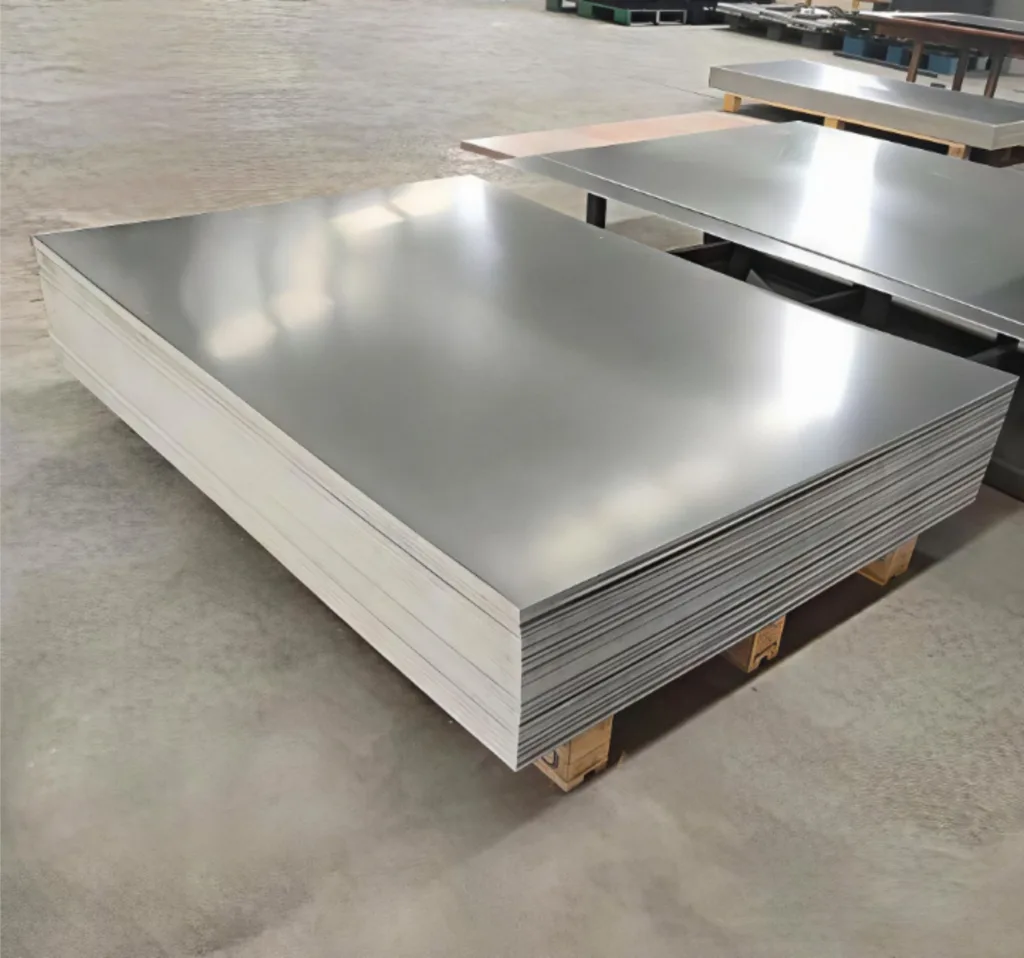
The nickel matrix provides thermodynamic stability. Nickel itself has a low tendency to dissolve in reducing acids, and its face-centered cubic structure allows it to maintain toughness and workability over a fairly wide temperature range. Molybdenum is the element that actually does the work: in reducing acid environments, molybdenum can form a protective corrosion-product film rich in Mo on the alloy surface—the specific form varies with potential and medium conditions, but its core function is to inhibit continued dissolution of the metal. Hydrochloric acid is a strongly reducing acid and contains no oxidizing components, so molybdenum’s film happens to be useful in this environment.
And chromium? Chromium’s specialty is forming a Cr₂O₃ passive film, but that requires oxidizing conditions. In hydrochloric acid, especially boiling concentrated hydrochloric acid, the environment itself is strongly reducing; chromium’s passive film is difficult to maintain, and chromium itself is thermodynamically no longer the “protector.” B3’s design logic is not simply “is chromium harmful or not,” but rather: if a subject does not count toward the total score, why spend effort studying it?
Reduce chromium to the minimum, give the saved composition space to molybdenum, and push molybdenum to the 28%–30% level. What is gained is extreme specialization against reducing acids—especially hydrochloric acid. This is a conscious trade-off. It is not that chromium “cannot be added”; it is that chromium is deliberately not added.
Numbers Do Not Lie: In Hydrochloric Acid, B3 Is on Another Order of Magnitude
Popular science articles are most afraid of giving only adjectives and no numbers. But B3’s performance in hydrochloric acid needs no adjectives.
In boiling 20% hydrochloric acid, B3’s annual corrosion rate can be controlled within 0.1mm. Data from different sources differ slightly: some documents give a typical value of about 0.08 mm/a, while other manufacturer data range from <0.1 mm/a to 0.4 mm/a. The scatter in values comes from differences in test conditions, material batches, and corrosion evaluation standards, but the order of magnitude is clear: a few tenths of a millimeter per year, or even lower.
Lower the concentration a little while keeping the temperature near boiling: in 15% hydrochloric acid at 98℃, B3’s corrosion rate is about 0.31mm/a. This number alone is not “impressive,” but the comparison object determines its weight. Under the same hydrochloric acid environment, ordinary austenitic stainless steel may corrode hundreds of times faster. What does hundreds of times mean? If a B3 coupon loses 0.3 millimeters in a year, the corresponding stainless steel loss could be tens of millimeters—not “a somewhat shorter service life,” but perforation within a few months.
In more concentrated hydrochloric acid, B3 still maintains its advantage. Data summarized by some studies show that in boiling 37%hydrochloric acid, B3’s corrosion rate is on the order of 0.25–0.4 mm, while lead alloy Zircaloy-2 under comparable conditions is a step higher. In reviews of corrosion in the petrochemical field, under boiling concentrated hydrochloric acid conditions, Hastelloy B-3’s corrosion rate does not exceed 0.35 mm/a, while the Hastelloy C series under the same conditions can exceed 2.5 mm/a.
C276 is not a “bad material” in hydrochloric acid. It is one of the industry’s most reliable “universal” materials, fully usable in hydrochloric acid from room temperature to moderate temperatures, and in many mixed acids and complex service conditions containing chloride ions it is sometimes the only realistic choice. But if the question is narrowed to pure hydrochloric acid systems, pursuing extreme corrosion resistance and not allowing oxidizing impurities to exist, the industry’s default answer switches from C276 to B3. This is not a preference; it is a boundary drawn by corrosion data.
Why “Less Chromium” Is Actually Right in Hydrochloric Acid: A Division of Labor Between Protective Films
To understand B3’s counterintuitive design, one needs to break “corrosion resistance” into two different physicochemical paths.
The corrosion resistance of stainless steel and chromium-containing nickel-based alloys depends mainly on passivation: under oxidizing conditions, chromium forms an extremely thin, dense, self-repairing Cr₂O₃ oxide film. This film separates the metal substrate from the corrosive medium, and the corrosion rate therefore drops to an extremely low level. But this mechanism has a prerequisite—the environment must be able to keep chromium in an oxidized state. In nitric acid, in water containing dissolved oxygen, and in hypochlorites, chromium’s passive film is in its element. But in hydrochloric acid, the situation flips: hydrochloric acid is a reducing acid, with high hydrogen ion activity and high chloride ion concentration. Chromium’s passive film is difficult to stabilize and may even become a weak link for selective dissolution.
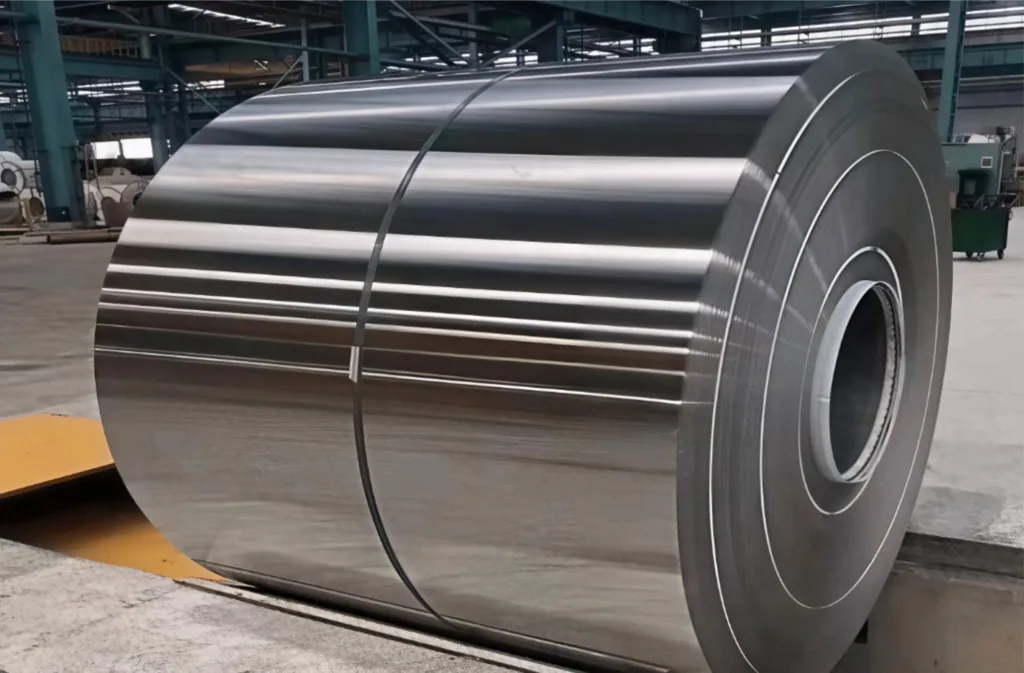
B3 takes another path. It relies on the protective surface layer formed by molybdenum in reducing acids. The nature of this film differs from chromium’s passive film. It is not a “passive film” in the traditional sense, but rather closer to a dynamically maintained molybdenum-rich corrosion-product layer whose stability depends on the environment remaining reducing and no strong oxidants appearing. The nickel matrix provides sufficient thermodynamic stability so that even when the film is locally damaged, the alloy does not dissolve as rapidly as iron-based materials.
In other words, chromium and stainless steel’s “corrosion-resistance logic” is passivation in oxidizing environments; B3’s “corrosion-resistance logic” is molybdenum enrichment in reducing environments. These are two different operating systems. On the “machine” that is hydrochloric acid, chromium’s system cannot run, while B3’s system happens to be written for this machine.
This is also why B3’s “low chromium” is not cutting corners, but a systematic design decision. It concentrates resources—composition space, metallurgical complexity, and cost—on molybdenum and nickel, gives up versatility in oxidizing environments, and exchanges it for extreme specialization against reducing acids, especially hydrochloric acid.
Why the Fatal Weakness Is Fatal: Without Chromium, There Is No Fallback
A responsible popular science article about alloys cannot only talk about what an alloy “resists”; it must first talk about what it “fears.” For B3, the answer to this question is extremely clear and extremely brutal.
B3 does not resist any oxidizing medium.
Nitric acid—no. Chromic acid—no. Hypochlorites—no. Wet chlorine gas—no. Environments with high dissolved oxygen content—no. Ferric ions (Fe³⁺)—no. Cupric ions (Cu²⁺)—no.
Moreover, “no” does not mean “corrodes a little faster”; it means rapid failure. Some technical documents explicitly state that B3 is extremely sensitive to Fe³⁺: when the mass fraction of Fe³⁺ in hydrochloric acid reaches only 0.005%, corrosion resistance drops sharply. The mechanism is clear: Fe³⁺ is a strong oxidant. It oxidizes the protective Mo⁴⁺ on the B3 surface to soluble Mo⁶⁺, chemically “tearing down” the protective layer. The alloy shifts from a relatively stable state into a transpassive state, the corrosion rate surges, and pitting may accompany it.
This leads to the first principle of B3 selection, and also the most essential division of labor between it and C276:
When choosing B3, the first thing is not to look at what it resists, but to first confirm that there are no oxidants in the service environment.
C276 contains 14.5%–16.5% chromium. Its design logic is “universal for mixed oxidizing-reducing media.” Chromium’s passive film gives it a backup line of defense in environments containing oxidants, while molybdenum and tungsten handle reducing acids and localized corrosion. It is the kind of material that “can withstand a little of everything,” at the cost that under the extreme conditions of pure reducing hydrochloric acid, its corrosion-resistance ceiling is lower than B3’s.
B3 has no chromium, so it has no fallback. Its protective layer exists only in reducing environments. Once an oxidant appears, this layer is broken down, and behind it is the bare nickel-molybdenum substrate directly facing corrosion. This is not “performance degradation”; it is “system failure.” So B3’s specialization is not a matter of temperament; it is structural: its high score in hydrochloric acid and its zero score in oxidizing media are two sides of the same coin.
B3’s Improvement over B2: A Specialist’s Self-Cultivation
B3 did not appear out of thin air. Its predecessor B2 (UNS N10665) had already proven itself in hydrochloric acid service, but B2 had an engineering weakness that could not be avoided: thermal stability.
When B2 is held for a long time in the 600–850℃ range, or experiences welding thermal cycles, brittle intermetallic phases such as Ni4Mo readily precipitate at grain boundaries. The consequences are direct: the material embrittles, toughness drops sharply, the weld heat-affected zone becomes a weak link, and post-weld overall solution heat treatment is often required for safe service. For large equipment, field-welded piping, and components that cannot be solution-treated as a whole, this is a real manufacturing bottleneck.
B3’s improvement path once again reflects the “subtraction” approach. It does not pile more elements into the alloy to “suppress” brittle phases; instead, it controls the elements that promote brittle-phase precipitation within narrower and lower ranges—controlling iron content, keeping chromium at an extremely low level, adjusting the tungsten ratio, and strictly limiting carbon and silicon. As a result, B3’s tendency to precipitate brittle phases in the medium-temperature range is significantly reduced, toughness and corrosion resistance in the as-welded condition are better maintained, the hot-working window is wider, and the manufacturing tolerance for welded components is clearly improved.
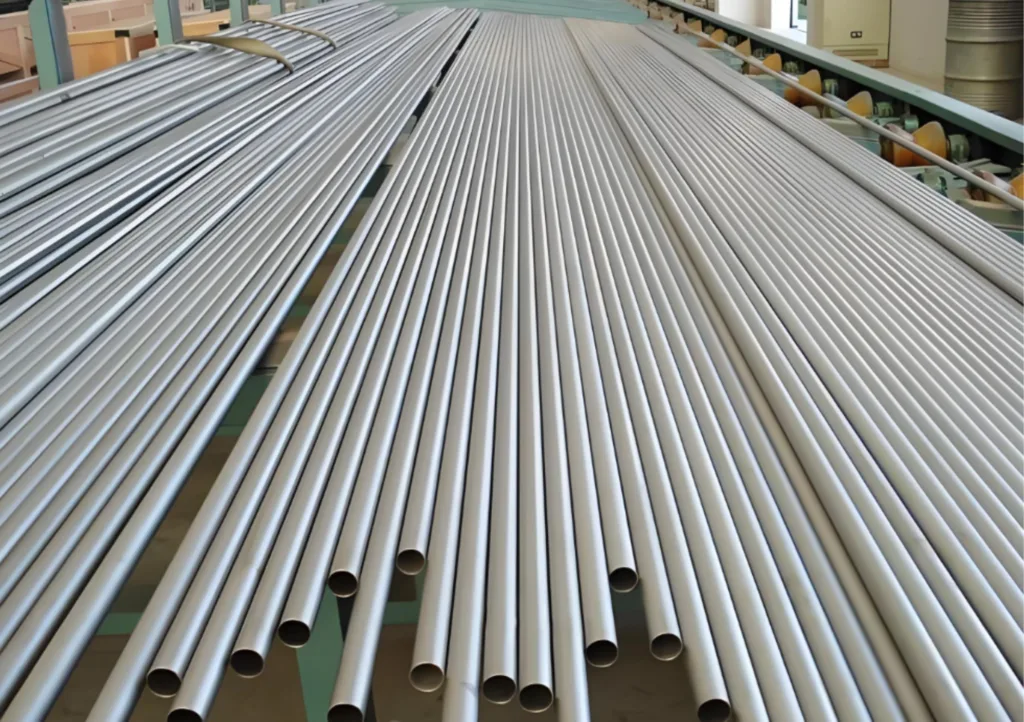
It must be made clear that B3 is not “completely immune” to brittle phases. It still needs to avoid the dangerous range of 538–870℃, and thick-walled, high-stress critical equipment is still recommended to undergo post-weld solution treatment and rapid cooling. But compared with B2, B3 changes “must be post-weld heat treated before use” into “as-welded condition can be used for many ordinary components, with critical equipment heat treated as needed.” In engineering, this difference often determines whether B3 can be manufactured—and whether it can be economically manufactured.
In other words, B3’s upgrade over B2 is not raising the specialist’s “main subject” from 95 to 98—in pure hydrochloric acid corrosion resistance the two were already in the same tier. Rather, it gives this specialist better physical fitness and attendance, so that it can truly enter the factory and be welded into towers, piping, and reactors, instead of remaining only in sample data tables.
Where the Name B3 Should Be Remembered
B3’s application scenarios are essentially variations on the same sentence: reducing acids, no oxidants, hydrochloric acid first.
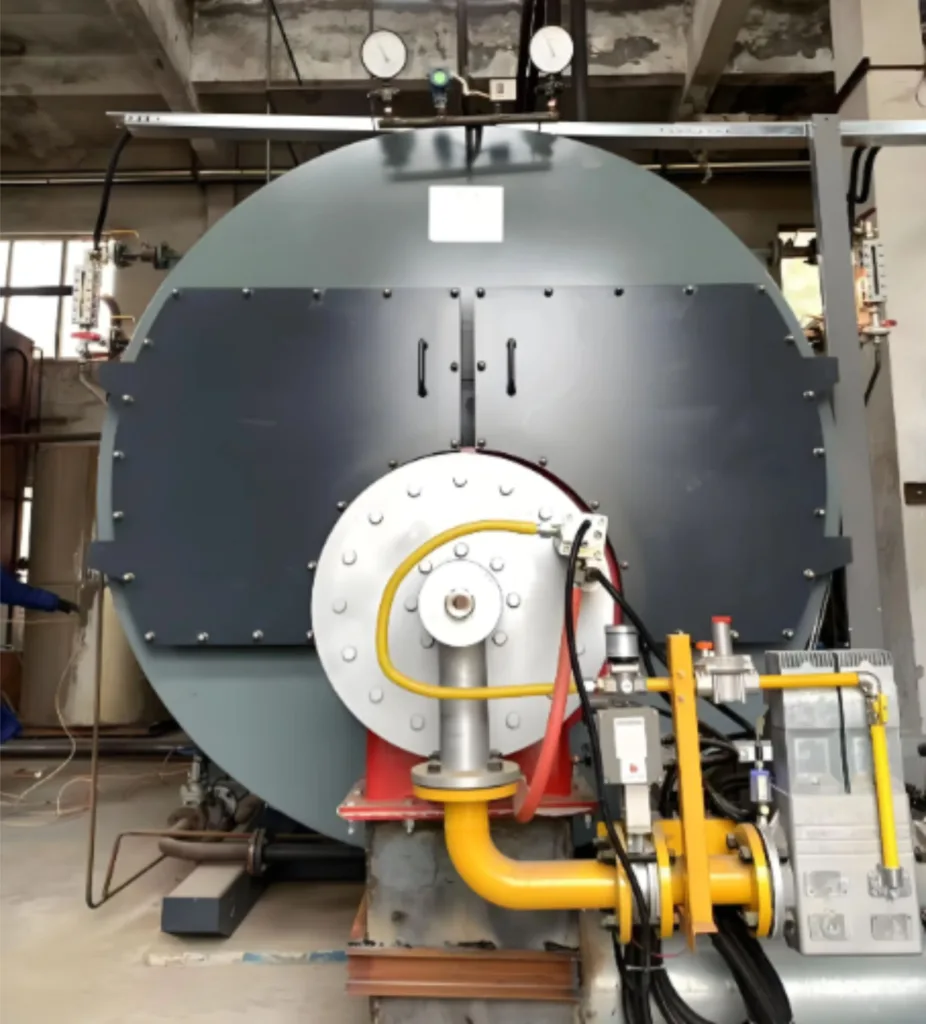
Hydrochloric acid synthesis, storage, and handling are the most direct fields. Burners, coolers, piping, and fittings in synthesis furnaces; storage tanks for hydrochloric acid of different concentrations and temperatures; and pump bodies, valves, and piping for transporting hydrochloric acid are all classic B3 positions. Evaporators, reboilers, and condensers in hydrochloric acid recovery systems are likewise—in these equipment, hydrochloric acid is repeatedly concentrated at boiling or near-boiling temperatures, and the corrosion conditions are far harsher than those of ambient-temperature storage tanks. Only then does B3’s corrosion-resistance margin become meaningful.
Sulfuric acid recovery is another scenario worth expanding on. B3 also performs excellently in reducing sulfuric acid environments. Under 70% sulfuric acid at 50℃, B3’s corrosion rate can be below 0.05 mm/a; in sulfuric acid mixed acids containing chloride ions, it is also more comfortable than many alternative materials. Sulfuric acid alkylation reactors and heat exchangers in sulfuric acid recovery systems are positions where B3 has already been verified in industry.
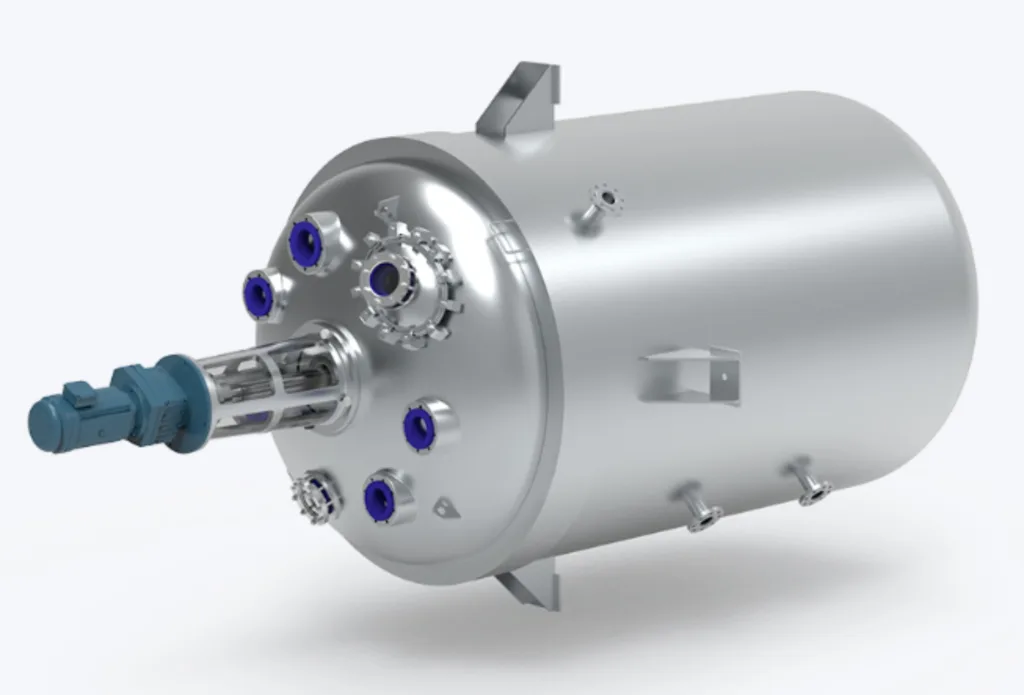
Acetic acid and acetic anhydride production reflects B3’s extension into the organic acid field. Acetic acid itself is a reducing acid, and B3 has good corrosion resistance to non-oxidizing media such as acetic acid, formic acid, and phosphoric acid. Dehydration towers, reactors, heating coils in acetic acid production, as well as hydrogenation reactors and intermediate storage tanks involving hydrochloric acid or chlorides in the pharmaceutical industry, can all show B3’s presence. In vitamin C production, B3 has even been used to replace glass-lined equipment, precisely because of its stability and workability in reducing acidic media.
Putting these scenarios together, B3’s “specialist” portrait becomes complete: it is a top player in the “reducing acid exam rooms” of pure hydrochloric acid, reducing sulfuric acid, and organic acids; once nitric acid, hypochlorites, Fe³⁺, Cu²⁺, or sufficient dissolved oxygen appears on the exam paper, it will hand in a blank sheet—and take the equipment down with it.
The Premise of the Ultimate Answer Is to See the Question Clearly First
“B3 is the ultimate answer for hydrochloric acid service”—this sentence needs to be read correctly.
It does not mean that B3 is superior to C276 in every service condition containing hydrochloric acid. If the hydrochloric acid contains even trace amounts of Fe³⁺ or Cu²⁺, if the system contacts carbon steel or copper piping and continuously dissolves metal ions, if dissolved oxygen continuously enters the process, or if the medium also contains nitric acid or hypochlorites, then B3’s “ultimate” status immediately fails, and C276 or C-series alloys are the correct direction.
What it means is: when the service condition is the question of “pure hydrochloric acid, no oxidants, pursuing extreme corrosion resistance,” B3 is the most dedicated answer written in chemical composition. It gives up chromium, gives up versatility in oxidizing environments, gives up the sense of security of “being able to withstand a little of everything,” pushes nickel and molybdenum to the extreme, and in exchange gains a place at the very front rank of reducing acids.
In a materials world infatuated with “adding things,” B3 reminds us: true specialization is often not achieved by adding something, but by clearly knowing what should not be added—and then bearing the cost of not adding it.
The ultimate answer for hydrochloric acid service does not belong to every question containing hydrochloric acid. But for the question it was truly designed to answer, B3’s answer still has few rivals.