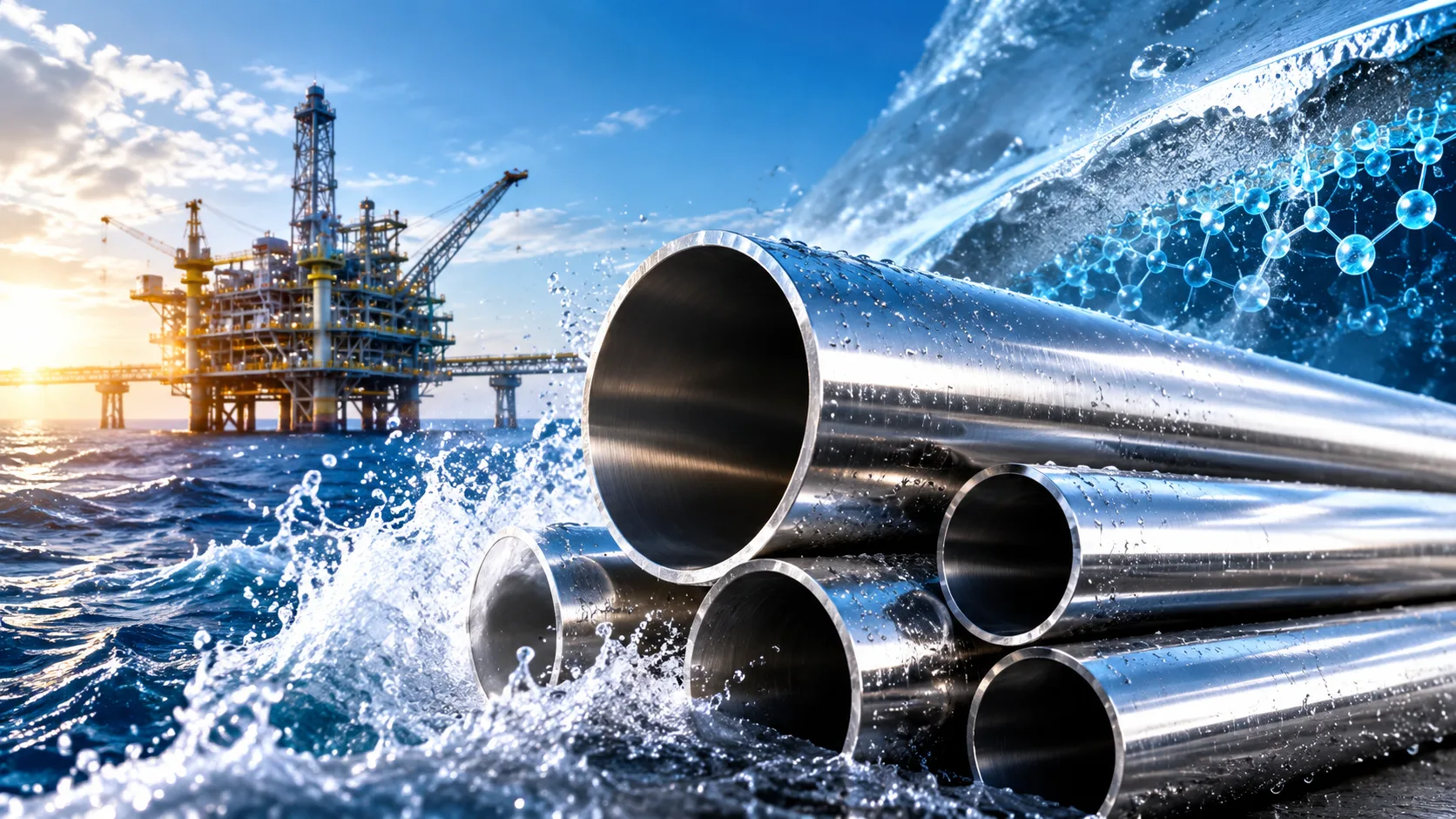
Other steels rust in saltwater; this one contemplates life in boiling brine.
A friend who works in seawater desalination operations once said: the most frustrating thing about concentrated brine piping isn’t that it leaks — it’s that you never know when it will leak. You’ve just replaced one section, and another is quietly pitting through beneath the insulation. Maintenance schedules can never keep up with the pace of corrosion.
This isn’t a management problem — it’s a materials problem. When chloride concentration, temperature, and acidity are all maxed out simultaneously, the failure of ordinary stainless steel isn’t a question of “whether” but of “which maintenance cycle.” And 654Smo exists precisely to rewrite that timetable entirely.
First, a Look at the Sites That “Don’t Survive More Than a Few Maintenance Cycles”
Seawater desalination has two main battlegrounds. The corrosion logic isn’t entirely the same, but the endpoint is similar.
In thermal multi-effect distillation, seawater is repeatedly heated and evaporated. Chloride ions become enriched as the concentration factor rises, and evaporator walls simultaneously endure concentrated brine, steam impingement, and crevice stagnation. Cold-process reverse osmosis is somewhat “gentler,” but chloride concentrations at the high-pressure pump outlet, membrane housings, and concentrated brine piping are still in the tens of thousands of ppm range, with temperatures hovering long-term in the 40–70°C range. In the more extreme case of concentrated brine evaporation and crystallization, NaCl content can reach 15%–30% or even higher, with localized chloride concentrations approaching hundreds of thousands of ppm — high temperature, crevices, and low-velocity impingement all stacking together.
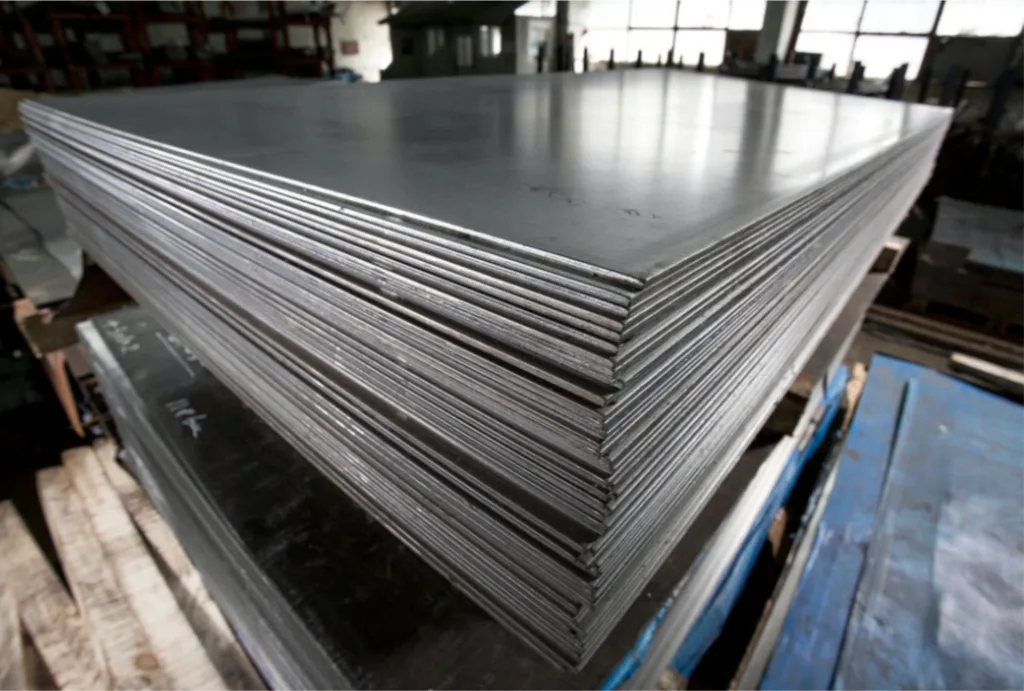
Wet flue gas desulfurization (FGD) is a battleground of another order of magnitude. In the limestone-gypsum spray tower, flue gas is cooled from around 130°C to approximately 80°C before entering the absorber tower. Chloride ions in the spray slurry continuously concentrate in the closed loop, with typical values of 10,000–50,000 ppm — higher in closed-loop systems — and pH常年 between 3 and 6, accompanied by fluoride ions. Chloride, temperature, and acidity — these three variables don’t merely “add” here; they amplify each other.
In such environments, 316L’s CPT (critical pitting temperature) in 6% FeCl₃ is only about 25°C. The actual wall temperature in the spray zone of an FGD tower frequently crosses this line. Once pitting initiates in crevices or beneath deposits, perforation is only a matter of time. 904L and 254SMO can hold out longer, but when chloride concentration and temperature both push upward simultaneously, maintenance cycles are still measured in “years” or even “months.” Field data from the hydrometallurgy sector is telling: 254SMO in a leaching solution with 6% Cl at 80°C still shows an annual corrosion rate of 0.05 mm, requiring equipment replacement every 3–4 years.
This is the engineering meaning of “doesn’t survive more than a few maintenance cycles.” It’s not that the material is substandard — it’s that the operating conditions have already crossed beyond the conventional corrosion-resistance boundary of austenitic stainless steel.
Where 654Smo Pushes That Boundary
654Smo (UNS S32654, EN 1.4652) is not a “modified 316L,” nor is it “254SMO with a bit more molybdenum.” It is the second-generation 7% Mo super-austenitic stainless steel introduced by the Swedish company Avesta (now Outokumpu) in the 1990s. Its design objective was clear from the start: to push the resistance of the austenitic stainless steel system to chloride-induced localized corrosion to the physical limit permitted by solubility.
First, two of the most direct indicators.
PREN — the pitting resistance equivalent number. Calculated as Cr + 3.3Mo + 16N, 654Smo’s typical value falls in the 54–56 range, with some heats exceeding 60. For reference, 316L’s PREN is around 25–28, 254SMO is around 43, and 904L is lower still. PREN is not a precise life predictor, but its reliability for ranking within the same class of media has been validated by extensive engineering practice. A value above 54 means the “threshold” for resistance to chloride pitting has been substantially raised.
CPT — critical pitting temperature. Measured per ASTM G48 Method A in 6% FeCl₃ solution, 654Smo’s CPT stands above 85°C, with some data pointing above 100°C. 6% FeCl₃ is recognized by corrosion engineers as a “severe accelerated test medium” — in the boiling state, its attack on stainless steel far exceeds that of the vast majority of actual service conditions. That 654Smo still does not pit in such a medium means its pitting resistance has exceeded the range that conventional test methods can easily “break through.” Some sources state plainly: 654Smo’s pitting resistance is so good that common test methods are insufficient to initiate corrosion.
Put this data back into the earlier scenarios: in the FGD spray tower’s environment of around 80°C, tens of thousands of ppm chloride, and pH 3–6, which for 316L and 254SMO is a condition of continuous approach or even exceedance, 654Smo still retains margin. The design life target for RO membrane housings and piping in seawater desalination is set at 25+ years — this is the basis. In concentrated brine evaporators, maintenance intervals can be extended from once every six months to once every two to three years. In the chlorination/chlorine dioxide washing environment of the pulp bleaching stage, field coupon test results show: 254SMO, 904L, and 2205 all exhibited varying degrees of corrosion, while 654SMO remains unattacked.
To summarize in one sentence: other steels rust in saltwater; this one contemplates life in boiling brine.
“Maxed Out” Is Not Rhetoric — It’s a Physical Fact of Composition Design
654Smo’s chemical composition table has nearly every element approaching the solid-solubility limit of austenitic stainless steel.
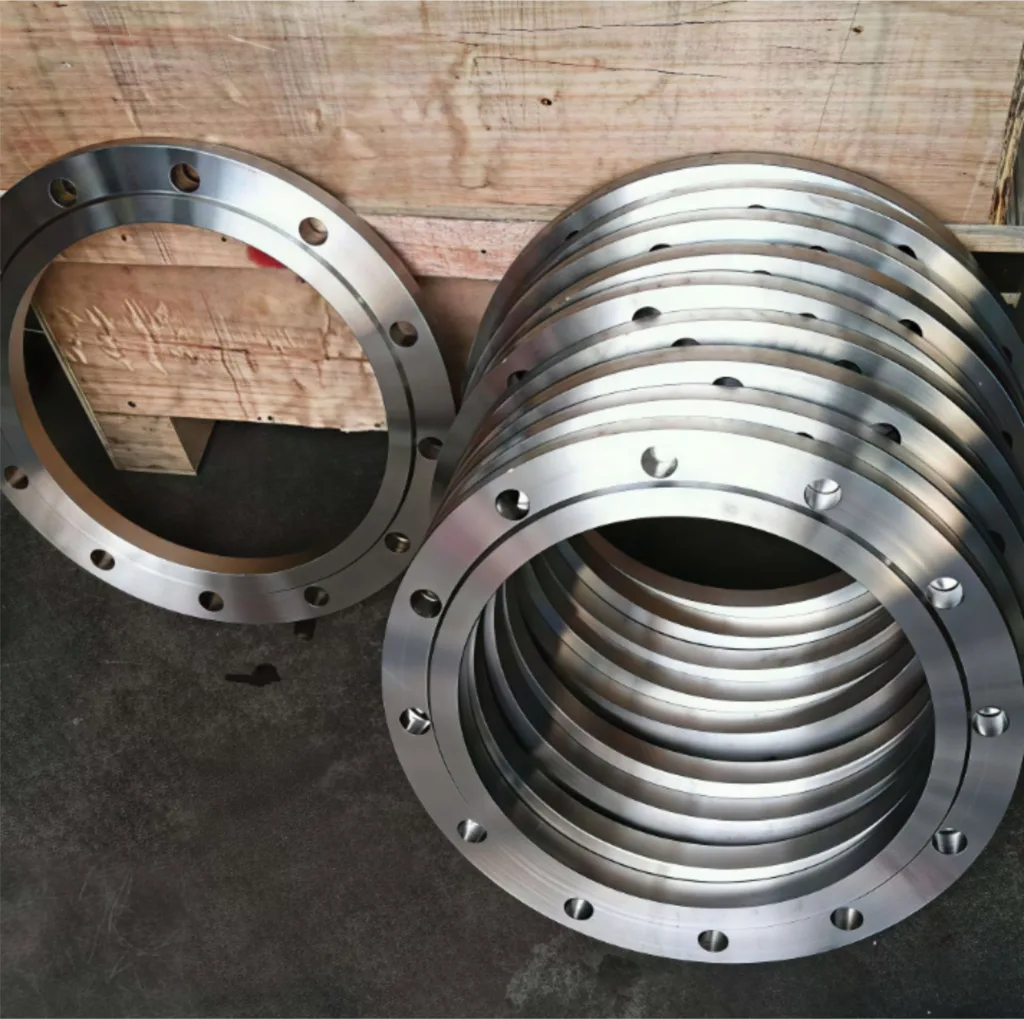
Chromium 24–25%: builds the passive film. Chromium is the foundation of stainless steel’s corrosion resistance. The thickness, stability, and self-repair capability of the Cr₂O₃-based passive film increase with chromium content. But chromium cannot be added indefinitely — too much promotes σ-phase precipitation, compromising toughness and corrosion resistance. 24–25% is already a fairly aggressive chromium level for austenitic stainless steel.
Molybdenum 7–8%: combats pitting and crevice corrosion. Molybdenum’s inhibition of localized corrosion in chloride environments is the most expensive “wonder drug” in austenitic stainless steel alloy design. Conventional 316L has only 2–3% molybdenum; 254SMO achieves 6%; 654Smo pushes to 7–8%, approaching the solid-solubility limit of the austenitic matrix. Any more, and hot working and phase stability would become seriously problematic.
Nitrogen 0.45–0.55%: pushes PREN past 54 while simultaneously raising strength. Nitrogen is one of the key variables distinguishing 654Smo from 254SMO: 254SMO’s nitrogen content is approximately 0.2%, while 654Smo more than doubles it. Each 0.1% increase in nitrogen raises yield strength by roughly 60–80 MPa; the solid-solution strengthening contribution of 0.5% nitrogen can reach approximately 300 MPa. This means 654Smo achieves extreme corrosion resistance while also attaining strength far exceeding conventional austenitic stainless steel — solution-annealed yield strength typically above 400–450 MPa, tensile strength 750–850 MPa.
But nitrogen’s solubility in liquid steel is limited. To “press” approximately 0.5% nitrogen into the austenitic matrix and retain it through subsequent processing requires two conditions: high-pressure metallurgical means (AOD/VOD refining combined with nitrogen addition processes), and a key compositional supporting player — manganese at 2–4%. Manganese itself does not directly provide chloride corrosion resistance; its role is to increase nitrogen’s solubility in liquid steel, allowing 0.45–0.55% nitrogen to stably enter the single-phase austenite rather than escaping as gas porosity or nitride inclusions. Manganese here is the “nitrogen carrier,” not a corrosion-resistance element.
Only when all three lines are maxed out simultaneously do you get 654Smo. Add only chromium — the passive film strengthens, but pitting resistance is insufficient. Add only molybdenum — localized corrosion resistance goes up, but costs spiral and workability deteriorates. Add only nitrogen — strength increases, but nitrogen won’t dissolve in. Cr builds the film, Mo fights pitting, N pushes PREN, Mn stabilizes nitrogen solubility — this is an interlocking compositional logic where removing any one link causes the PREN above 54 to collapse.
Where It’s Actually Used: The Triple Overlap of Chloride, Temperature, and Acidity
654Smo is not a material that “works everywhere.” Its application map has a clear common feature: chloride + temperature + acidity — all three present simultaneously, with at least one pushed beyond the failure boundary of ordinary stainless steel.
Seawater desalination and concentrated brine systems. RO membrane housings, high-pressure piping, heat exchanger tubes, concentrated brine evaporators. Chloride from thousands to hundreds of thousands of ppm, temperatures from ambient to above 100°C, and localized pH depression during concentration. 654Smo’s value in these locations is not “a bit more corrosion-resistant” — it’s pushing design life from “repeated replacement” to the level of “maintenance-free intervals.”
Wet FGD spray tower internals. Spray layer supports, grids, mist eliminator areas, duct linings. Corrosion here is not single-medium corrosion — it’s the combined action of chloride pitting, low-pH acid corrosion, erosion-corrosion, and crevice corrosion. 654Smo’s performance in FGD condensate acid (Cl⁻ + SO₂ + F⁻) environments is one of the core bases for its classification as an “extreme-condition material.”
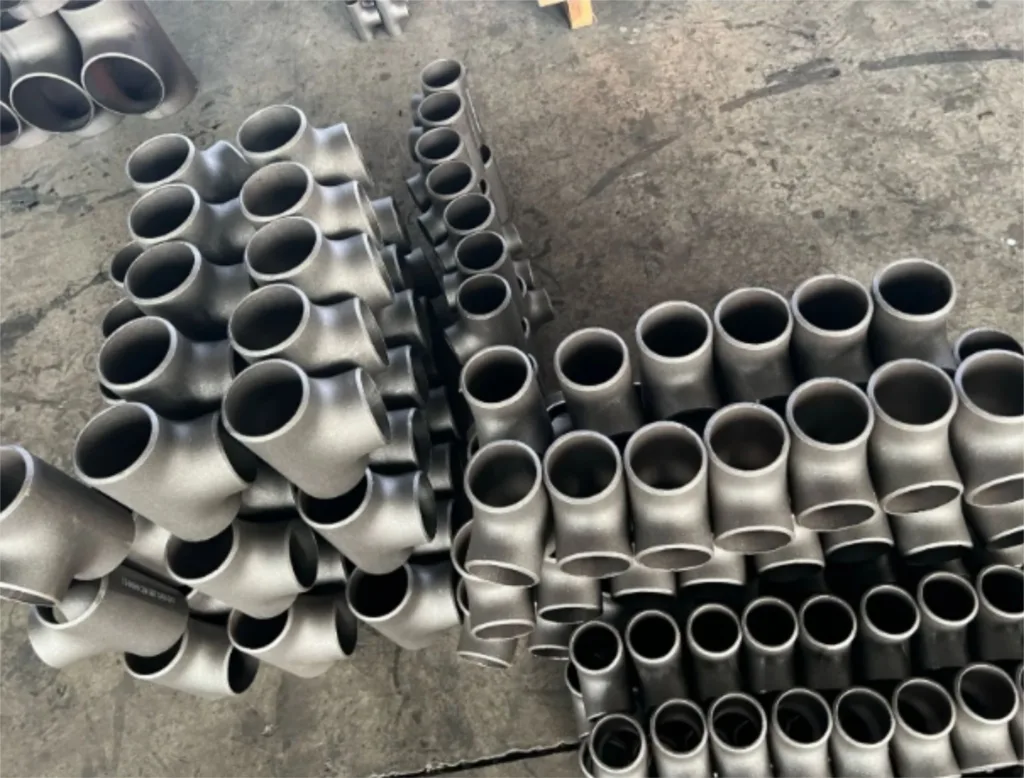
Pulp bleaching stages. The chlorination stage and chlorine dioxide bleaching stage environments are extremely hostile to stainless steel: chlorine, chlorine dioxide, chloride ions, and acidic conditions all present simultaneously, and as processes move toward closed-loop circulation, corrosivity further concentrates. The “remains unattacked” result in field tests directly corresponds to those washers, pipes, and tank linings in bleaching plants that have been replaced time and again.
Chloride-containing chemical evaporative crystallizers. In evaporation and crystallization of NaCl, KCl, and CaCl₂ systems, the mother liquor has high chloride concentration, high temperature, and often solid-particle erosion. That 316L “perforates in less than six months” in such environments is not an exaggeration — it’s the real service life scale under concentrated brine conditions.
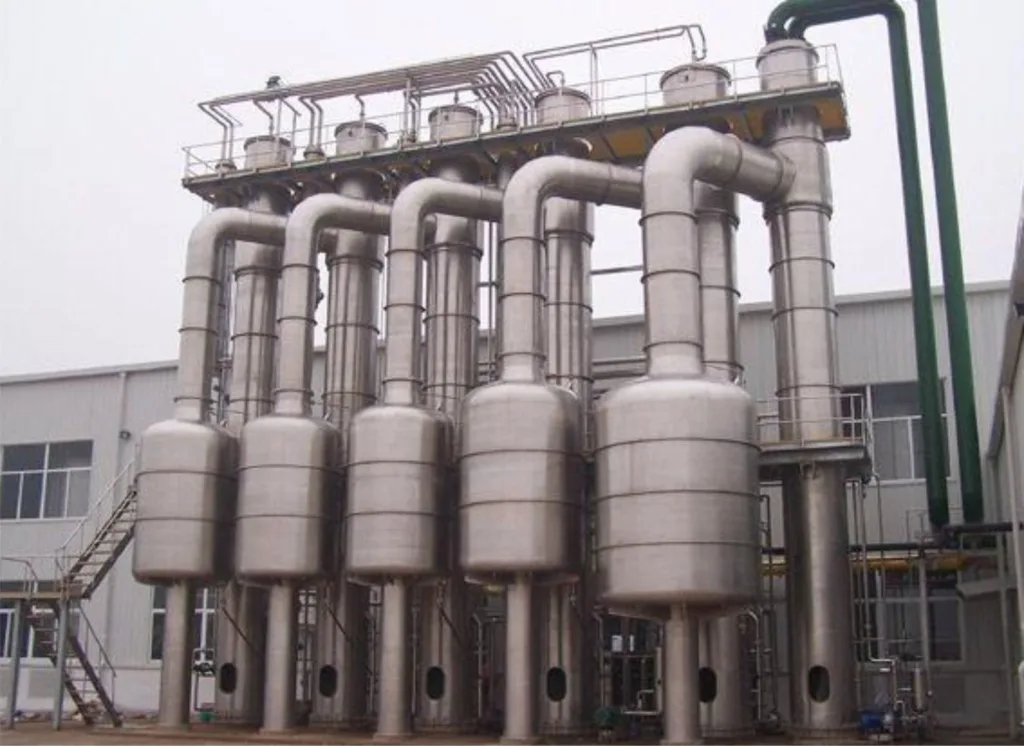
The common thread across these scenarios: corrosion is not uniform thinning — it’s localized perforation. The failure logic of localized corrosion is completely different from uniform corrosion — it provides no warning window based on “remaining wall thickness.” A pit progressing from initiation to penetration in a few months is far more dangerous than overall wall thinning of a few tenths of a millimeter per year. 654Smo’s PREN and CPT target precisely this time window from initiation to perforation.
Why It’s Called “The Economical Substitute for Nickel-Based Alloys”
Before 654Smo existed, the ultimate answer for the above conditions was nickel-based alloys like Hastelloy C-276. C-276’s corrosion resistance is indeed there, but the cost is also real: nickel and molybdenum contents far exceed those of 654Smo, material cost is several times higher, and the welding process window is narrow — heat input must be strictly controlled below 15 kJ/cm, field welding qualification rates may be only 70%, schedules stretch out, and once rework costs are layered in, the total cost far exceeds the material unit price alone.
654Smo’s positioning is not “surpassing C-276” — it’s achieving corrosion resistance close enough to C-276 in the vast majority of chloride + temperature + acidity conditions, while retaining the process fundamentals of austenitic stainless steel.
Weldable, cold-formable, manufacturable according to the workshop logic of conventional austenitic stainless steel. Welding recommends matching nickel-based filler metals (such as ERNiCrMo-3) for GTAW/TIG, no preheating, interpass temperature controlled below 80°C, and generally no post-weld heat treatment required. Cold working has a work-hardening tendency; intermediate annealing may be needed after 15%–20% deformation, but this is still the processing language of austenitic stainless steel — not the “every step is nerve-wracking” language of nickel-based alloys.
The cost comparison is more direct: 654Smo’s cost is approximately one-third to one-half that of C-276 for the same service conditions. When a project needs “25-year design life” rather than “absolute corrosion resistance regardless of cost,” this cost-performance relationship becomes the watershed in engineering decisions.
The Full Life-Cycle Ledger: When Choosing It Saves Money, and When It Doesn’t
654Smo’s alloy cost is what it is. Its price per unit weight is significantly higher than 316L and duplex steels — this is a fact that needn’t be avoided. But its true value isn’t on the purchase order — it’s in the full life-cycle cost.
The logic is simple: if a piece of equipment, due to corrosion, requires shutdown for cleaning, localized weld repair, or even full-section replacement every two or three years, then the material price differential often becomes trivial compared to downtime losses. A 24-hour unplanned shutdown in continuous-process industries can represent revenue losses in the hundreds of thousands of dollars. A single hydrochloric acid storage tank corrosion perforation leading to environmental remediation, production suspension, and product loss can easily exceed the material price differential by an order of magnitude.
654Smo’s ledger on concentrated brine evaporators looks like this: equipment life reaches 3× or more that of traditional materials, maintenance intervals extended from every six months to every two to three years. In a hydrometallurgy leaching tank retrofit case, a 254SMO tank developed wall thinning and weld pitting after only 3 years of operation, forcing major overhaul; after replacement with a 654Smo thick-plate tank, annual corrosion thinning dropped to the 0.02 mm level, with no corrosion traces at welds, and full life-cycle cost approximately 40% lower than the C-276 solution.
But this ledger has a strict precondition: the cost of shutdown, cleaning, and parts replacement must be significantly higher than the material price differential. If the conditions are merely ambient temperature, low chloride concentration, and mild corrosion, with low downtime costs, then 654Smo’s economics simply don’t hold. In such scenarios, 2101 duplex stainless steel or 316L is a far more rational choice than 654Smo. Using 654Smo for an ordinary storage tank in ambient-temperature mild-corrosion media is trading engineering precision for psychological comfort — not materials selection.
The selection boundary needs to be clearly stated:
When to use 654Smo — chloride concentration and temperature simultaneously exceed the reliable range of 254SMO/904L, pH is low or fluctuating, localized corrosion (pitting/crevice corrosion) is the dominant failure mode, and downtime losses far exceed material costs.
When not to use 654Smo — ambient or moderate-low temperature, controllable chloride concentration, predominantly uniform corrosion, ample maintenance windows, and controllable downtime costs. In these scenarios, 316L, 2101, 2205, and 254SMO each have their place; forcing 654Smo into them won’t make the system more reliable — it will only make the budget uglier.
Epilogue
654Smo is not a master key. It is a key that turns smoothly in a specific lock — and that lock’s name is “chloride, temperature, and acidity all maxed out simultaneously.”
Its PREN of 54+, its CPT standing at 85°C or even above 100°C, its resistance to pitting in boiling 6% FeCl₃ — these data are meaningful not because the numbers themselves look good, but because they correspond to the real-world positions in engineering that have been “replaced time and time again”: concentrated brine piping, FGD spray supports, bleaching washers, evaporative crystallizers.
In these positions, material selection is never “expensive vs. cheap” — it’s “how many times are you willing to pay for corrosion over the equipment’s entire life.” 654Smo’s answer is: pay upfront, then let the equipment sit quietly in the brine, undisturbed.