
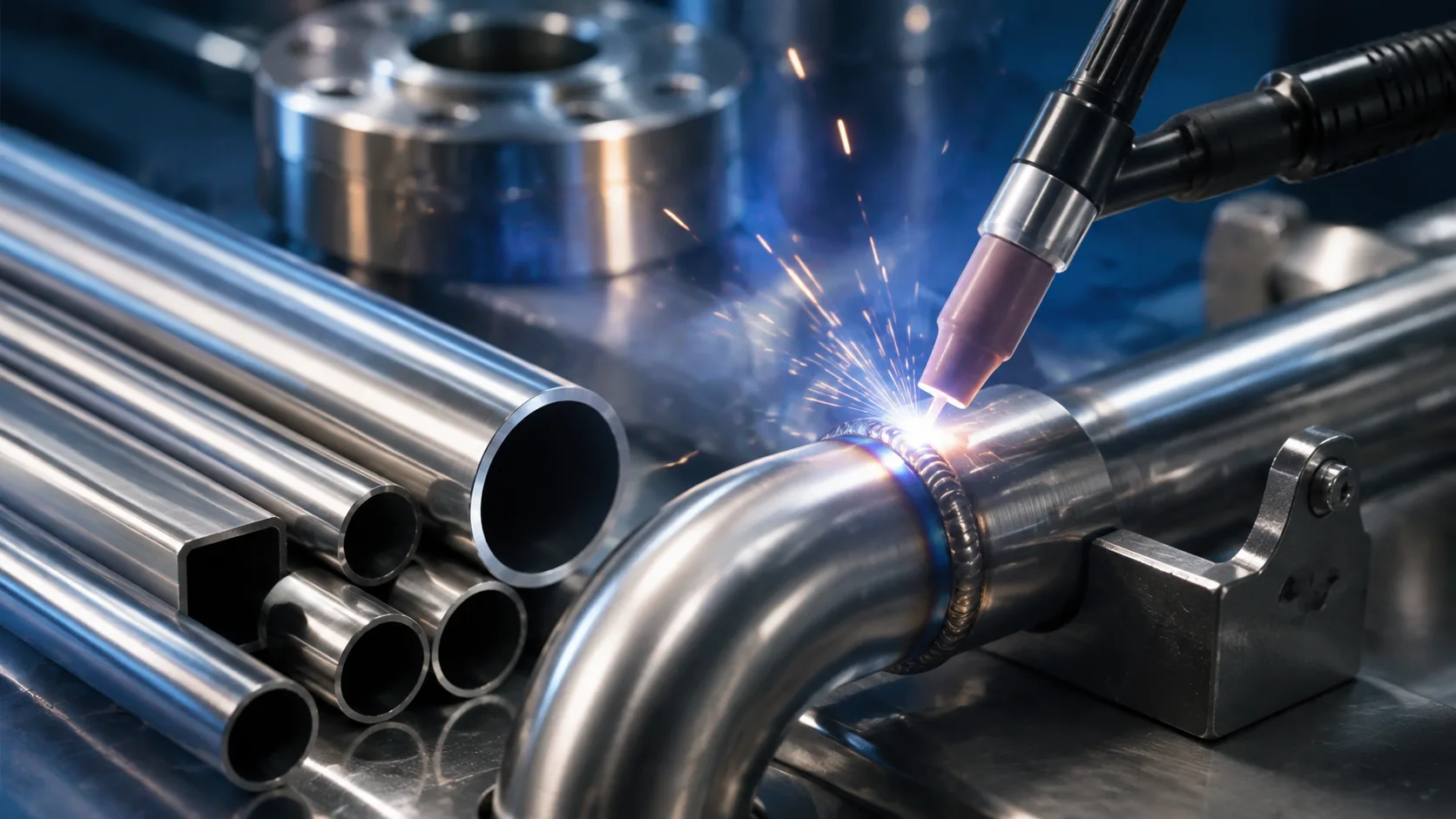
The weld is often the weakest point.
If you’ve ever bought a low-quality garment, after wearing it a few times, where does it fail first? Most likely not the fabric itself, but the seams—loose threads at the cuffs, split trouser seams, unraveling edge binding at the collar. The “joints” of clothing always go first.
The same is true for the “joints” of metallic materials—that is, welded joints. Many stainless steel equipment failures during long-term service occur not in the base metal itself, but near the weld. After ordinary stainless steel is welded, the heat-affected zone around the weld behaves like the poorly stitched thread of cheap clothing—it is the most prone to “rotting” from the seam. In materials science, this phenomenon has a specific name: intergranular corrosion.
And 316Ti was developed precisely to solve this “seam-unraveling” problem. It uses a clever method to reinforce its “joints” with an extra line of defense. Today, let’s talk about this “anti-fray” master of the welding world.

First, who is 316Ti?
316Ti, fully designated as 06Cr17Ni12Mo2Ti (new Chinese standard), with an old grade of 0Cr18Ni12Mo2Ti. It goes by several international aliases: German grade 1.4571 (X6CrNiMoTi17-12-2), UNS S31635, AISI 316Ti, and JIS SUS316Ti. Whatever you call it, it is essentially an austenitic stainless steel based on 316 stainless steel, stabilized by adding titanium (Ti).
What sets it apart from the more common 316L? The core difference lies in their entirely different approaches to corrosion resistance—316L relies on “low carbon,” while 316Ti relies on “titanium stabilization.” One reduces the “tool” at the source; the other sends a “bodyguard” to keep an eye on that tool. Two paths lead to the same goal, but their applicable scenarios differ greatly.
The typical chemical composition of 316Ti is roughly: chromium (Cr) 16.5%–18.5%, nickel (Ni) 10.5%–13.5%, molybdenum (Mo) 2.0%–2.5%, carbon ≤0.08%, and titanium content required to be Ti ≥ 5×C and ≤0.7%. The addition of molybdenum enhances its resistance to pitting and crevice corrosion in chloride-containing media. In terms of mechanical properties: yield strength ≥205 MPa, tensile strength ≥515 MPa, elongation ≥40%, and hardness ≤187 HB. It retains about 80% of its room-temperature strength at 600°C, with a service temperature range from –196°C to 800°C, and can be used briefly at up to 900°C.
These numbers may seem dry, but let’s put it another way—316Ti is like a warrior clad in a “molybdenum-alloy armor,” capable of withstanding high temperatures, resisting corrosion, and handling the “battlefield” of welding with ease.
The welding challenge: the “unraveling” pain of ordinary stainless steel
To understand why 316Ti is so impressive, we first need to grasp what goes wrong after welding ordinary stainless steel.
Stainless steel resists rust because of a thin, invisible chromium oxide (Cr₂O₃) protective film on its surface—like a transparent “anti-rust armor” over the metal. The key component of this armor is chromium. As long as chromium is present, the armor stays intact; if chromium is lost, the armor breaks.
The trouble begins during welding.
During welding, the temperature near the weld rises above 1000°C. At such high temperatures, carbon and chromium in the stainless steel become highly active. Carbon migrates to grain boundaries (the “borderlines” between metal grains) and combines with chromium to form chromium carbides (Cr₂₃C₆). Once chromium carbides precipitate at grain boundaries, they deplete the surrounding areas of chromium—creating a chromium-depleted zone.
In this depleted zone, the chromium content is too low to form a complete oxide protective film. Consequently, grain boundaries become the “entry point” for corrosion. Corrosive media penetrate along the grain boundaries, leading to cracking along the grain boundaries—this is intergranular corrosion.
This process is exactly like the seams of a cheap garment wearing out and cracking first—the fabric itself is still fine, but the stitching has already failed.
Even more troublesome, this phenomenon is particularly prone to occur in the temperature range of 450°C–850°C, which materials scientists call the “sensitization temperature range.” During welding, the area near the weld inevitably passes through this temperature range, and the cooling process after welding also lingers in this range for some time. If the material itself is not “robust,” it is easily “infected” in this range.
For ordinary stainless steels (such as 304 and 316), the common way to avoid intergranular corrosion is to perform solution treatment after welding—reheat the weldment to above 1000°C to redissolve the chromium carbides, then cool rapidly so that carbon has no time to combine with chromium. This is like re-stitching a garment that has come apart—it solves the problem, but is time-consuming and labor-intensive.
But the problem is that some equipment is too large—for example, storage tanks in chemical plants that are several meters in diameter and tens of meters high. You can’t just stuff the whole thing into a heat-treatment furnace. Some equipment is installed on-site, and after welding, heat treatment is simply impossible. What then?
“Titanium” stabilization: 316Ti’s unique expertise
316Ti was developed to solve the problem of “no post-weld heat treatment.” Its approach is not “mend the fold after the sheep are lost,” but “prevent before it happens.”
316Ti’s strategy: add titanium to the steel. Titanium is an element that has a stronger affinity for carbon than chromium does. At high temperatures, titanium “beats chromium to the punch” and combines with carbon to form extremely stable titanium carbide (TiC).
Once carbon is “locked up” as titanium carbide, it has no chance to bind with chromium. Chromium stays safely near the grain boundaries, the protective film remains intact, and intergranular corrosion has no foothold.
Think of it this way: a room has both “thieves” (carbon) and “security guards” (chromium). Ordinary stainless steel reduces the number of “thieves” to a minimum (low‑carbon 316L). 316Ti, on the other hand, assigns a more capable “personal bodyguard” (titanium) to watch every “thief,” so the thief has no opportunity to steal from the security guard.
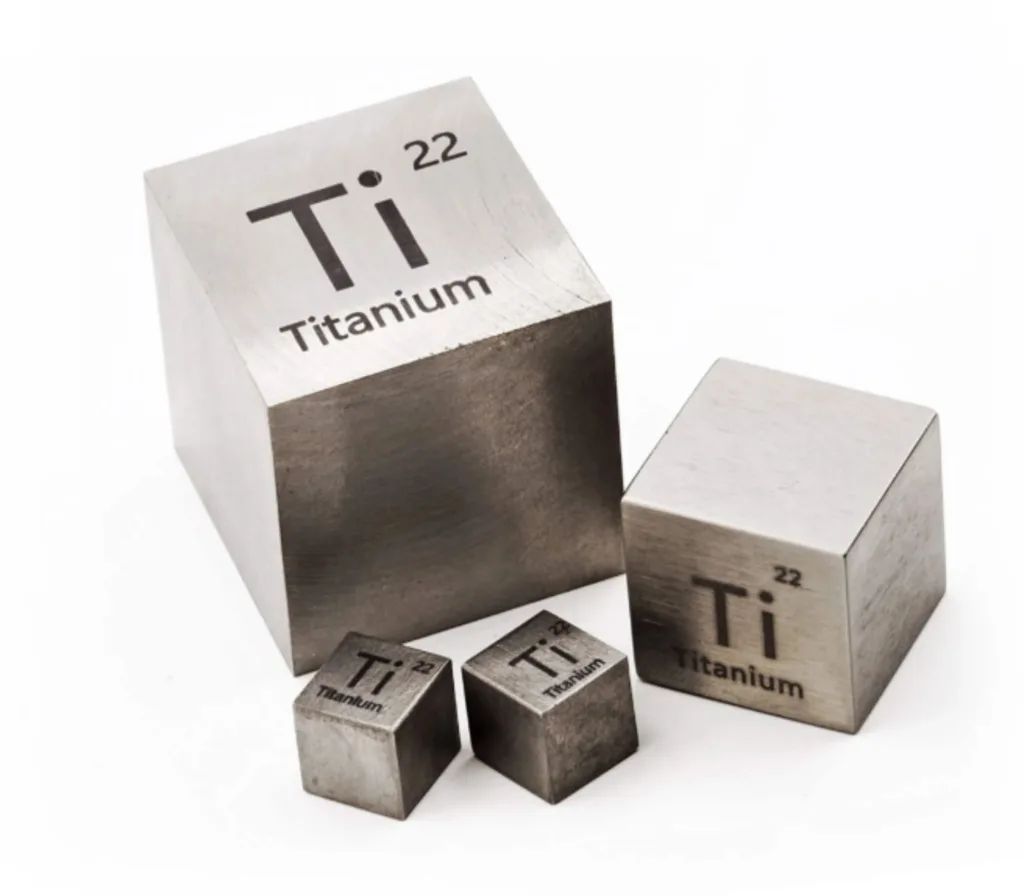
Both approaches work, but 316Ti’s “titanium bodyguard” strategy has a huge advantage—it does not require carbon content to be extremely low. 316Ti allows carbon up to 0.08%, higher than 316L (≤0.03%). This means 316Ti is less demanding on carbon control during smelting, offering cost benefits, while still maintaining excellent resistance to intergranular corrosion at higher carbon levels.
Moreover, 316Ti’s “titanium stabilization” effect is not temporary. Once titanium carbide forms, it is exceptionally stable and does not readily decompose during subsequent service. Even if the equipment operates for long periods in the sensitization temperature range (450–850°C), 316Ti can handle it with composure.
Welding “savior”: why chemical plants can’t do without it
With the “titanium stabilization” safeguard, 316Ti’s advantages in welding become clear.
First, no solution treatment after welding. Ordinary stainless steel requires heat treatment after welding to restore corrosion resistance, whereas 316Ti is ready for service directly after welding. For large equipment and on-site welding, this is a true “lifesaver.”
Imagine this scenario: a large storage tank in a chemical plant, 8 meters in diameter and 20 meters high, assembled by welding on-site. If ordinary stainless steel were used, you would have to figure out a way to perform solution treatment after welding—how on earth do you fit such a giant into a heat-treatment furnace? Even if you could, the cost and time would be prohibitive. With 316Ti, welding is done—and that’s it. Time, effort, and money saved.
Second, the heat-affected zone is less prone to sensitization. The welded joint area of 316Ti does not easily sensitize, and the resistance to intergranular corrosion in the weld‑adjacent zone is as good as that of the base metal. This means the entire welded structure—from base metal to weld to heat‑affected zone—has uniform corrosion resistance, with no “weak link.”
Third, reduced susceptibility to hot cracking. Through titanium stabilization, 316Ti lowers the sensitivity to welding hot cracks, making weld quality more reliable.
Because of these advantages, 316Ti holds an irreplaceable position in the chemical and petrochemical industries. Statistics show that the chemical and petrochemical sector is 316Ti’s largest downstream market, accounting for over 40%, used in coal chemical processing, high‑temperature refining reactors, heat exchangers, acid‑alkali transfer piping, and more. In addition, it is widely applied in pharmaceutical equipment, food processing equipment, marine engineering, power plant equipment, shipbuilding, and other fields.
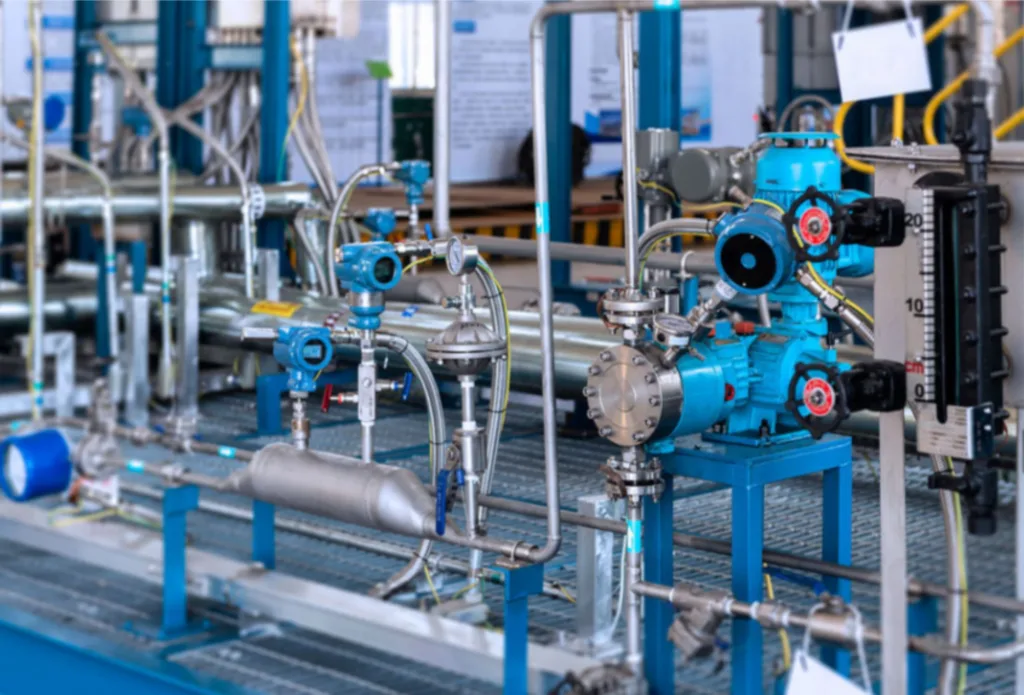
Corrosive media environments such as sulfuric acid, phosphoric acid, and acetic acid are 316Ti’s “home turf.” From reactors to storage tanks, from piping to valves, from heat exchangers to condensers—wherever there are stringent demands for both corrosion resistance and weldability, you will often find 316Ti at work.
316Ti vs. 316L: which one is for you?
Many people ask: How do you choose between 316Ti and 316L? Aren’t they pretty similar?
In most ordinary, non‑welding, room‑temperature applications, 316L and 316Ti can indeed be used interchangeably. However, in certain specific scenarios, their differences become apparent:
Choose 316Ti when:
– Post‑weld solution treatment is not feasible for large structural components—this is 316Ti’s core advantage.
– The equipment will operate long‑term in the 450–850°C sensitization temperature range—316Ti’s titanium stabilization makes it more resilient in this range.
– Multi‑pass welding or thick‑section welding—high heat input and repeated heating of the heat‑affected zone make 316Ti a safer choice.
– High‑temperature strength and oxidation resistance are required—316Ti retains about 80% of its room‑temperature strength at 600°C.
Choose 316L when:
– Ultra‑low temperature service (e.g., below –196°C)—316L offers better low‑temperature toughness.
– Extremely high resistance to pitting and stress corrosion cracking is demanded—some studies suggest 316Ti may be slightly inferior to 316L in these aspects.
– Ordinary room‑temperature, non‑welding applications—316L is more cost‑effective.
In short: if you need to weld and cannot perform post‑weld heat treatment, choose 316Ti; if you don’t weld, or can do solution treatment after welding, 316L is sufficient.
Welding 316Ti—it still requires care
Although 316Ti is inherently resistant to intergranular corrosion, you can’t just weld it haphazardly. Certain precautions are still necessary:
Filler metal selection: It is recommended to use stabilized filler metals containing titanium or niobium (e.g., ER318Si) to ensure that the weld metal also possesses resistance to intergranular corrosion. If ordinary filler metal is used indiscriminately, the weld itself may become a new “weak link.”
Interpass temperature control: Control the interpass temperature during welding to avoid excessively high temperatures and prolonged dwell times in the heat‑affected zone. Although 316Ti resists sensitization, it shouldn’t be “abused.”
Dissimilar metal welding: When welding 316Ti to carbon steel or other stainless steels, carefully select the electrode to prevent hot cracking due to improper electrode choice.
Extended exposure to sensitization range: Even though 316Ti performs well in the sensitization temperature range, if the equipment operates at 450–850°C for long periods, periodic assessment or, if necessary, solution treatment is still advisable.
The “titanium” different welding master
From “welding challenges” to “titanium stabilization,” from “intergranular corrosion” to “post‑weld treatment‑free”—the story of 316Ti is essentially one of wisdom in prevention.
Ordinary stainless steel, after welding, tends to crack from the joints like cheap clothing; 316Ti, in its own way, “reinforces” every weld seam. It does not need the “re‑stitching” of post‑weld heat treatment; it solves the problem from the material itself.
It is “titanium” different—not by reducing carbon, but by adding titanium;
It is “titanium” impressive—ready to use after welding, no waiting for heat treatment;
It is “titanium” stable—able to handle the sensitization temperature range with ease.
Next time you see a huge stainless steel storage tank, a complex piping system, or a high‑temperature reactor at a chemical plant, think about it—there might be this “titanium” different welding master quietly guarding the safety of every weld joint.
And its secret is simply the tiny titanium element, which locks up carbon before chromium, preserving the chromium and defending the invisible lines of defense, one by one.